
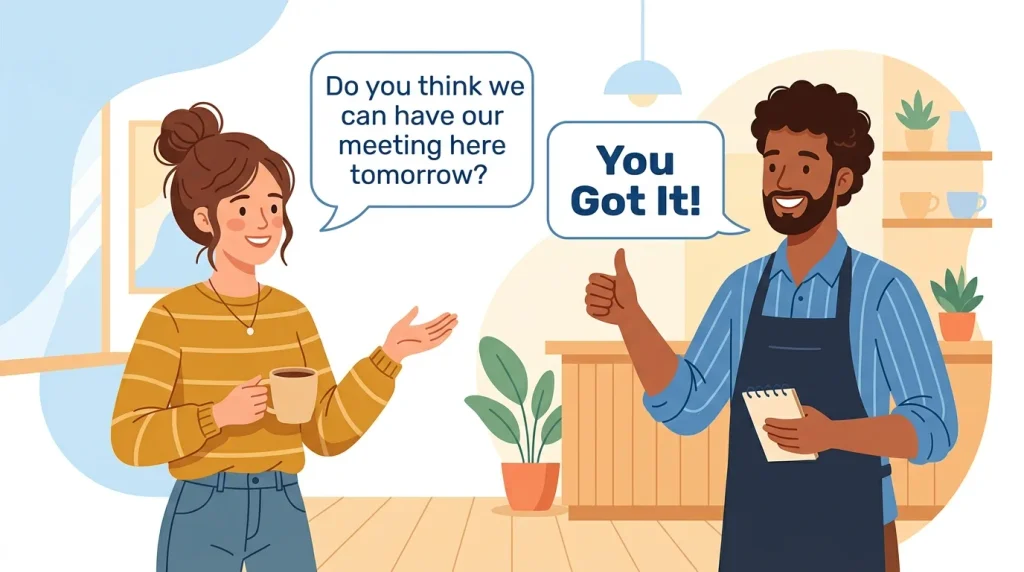
Have you ever asked someone for a favor and heard them reply, “You got it”? This short phrase pops up everywhere in stores, at work, and in everyday chats with friends.
But what does “you got it” mean, exactly? In simple terms, it’s a friendly way of saying “yes,” “okay,” or “I will do that for you.”People use it to show they agree to help or that they understand a request.
This guide breaks down the meaning, correct usage, and real-life examples so you can use this phrase with confidence in any conversation.
Quick Answer
“You got it” means “yes” or “I agree to do that.” It’s a casual, upbeat way to confirm a request or answer a question. You’ll hear it most often as a reply to a request, like when a waiter says “You got it!” after you order food, meaning your order is confirmed and on its way.
Meaning and Definition
At its core, “you got it” is an idiom. That means the words together create a meaning that’s different from what each word means alone. If you look at “got” and “it” separately, they don’t explain much. But put together in this phrase, they express agreement, confirmation, or understanding.
There are actually three common meanings, depending on the situation:
- Agreement or confirmation – “Sure, I’ll do that.” This is the most common use.
- Correct guess or understanding – “That’s right, you understood correctly.”
- Acknowledgement of a task – “Consider it done.”
For example, if a friend asks, “Can you pick up milk on your way home?” and you reply, “You got it,” you’re telling them yes, you will do it. The phrase carries warmth and friendliness, which is part of why people like using it instead of a plain “yes” or “okay.”
Grammar and Correct Usage
“You got it” is an informal expression, so it doesn’t follow strict grammar rules the way a formal sentence might. Still, it helps to know how it fits into a conversation correctly.
The phrase works as a standalone response. You don’t need to add extra words before or after it. Here’s how it typically appears:
| Situation | Example Sentence |
| Confirming a task | “Can you send the file by noon?” “You got it.” |
| Confirming an order | “One large coffee, please.” “You got it, coming right up.” |
| Agreeing to help | “Could you help me move this weekend?” “You got it!” |
| Confirming understanding | “So the meeting is at 3, not 4?” “You got it.” |
Notice that “you got it” always answers something. It’s a reactive phrase, meaning it responds to a question, request, or statement someone else made. It’s rarely used to start a conversation on its own.
One small grammar note: some people write it as “you’ve got it,” which is the more formal version using the contraction of “you have.” Both are correct, but “you got it” is more common in casual American English speech.
Origin and History
Language experts trace informal expressions like “you got it” to everyday American speech patterns that grew popular through the 20th century, especially in service industries like restaurants and retail. Short, friendly replies became a way to sound approachable rather than stiff or overly formal. While it’s hard to pin down one exact origin, this type of casual confirmation phrase became widespread in American English by the mid-1900s, and its use has only grown through television, movies, and everyday conversation since then.
It’s worth noting there isn’t a single verified inventor or event tied to this phrase. It developed naturally as part of spoken language, the way many idioms do. If you ever read a claim about an exact date or person who “invented” the phrase, be cautious. That kind of specific origin story usually can’t be confirmed.
British vs American English
“You got it” is used in both American and British English, but Americans use it far more often in casual, everyday speech. British English speakers are more likely to say “Will do,” “No problem,” or “Sure thing” in similar situations. That doesn’t mean “you got it” is wrong in British English. It’s understood everywhere English is spoken, but it carries a distinctly American, casual tone.
Here’s a quick comparison of how each style tends to respond to a simple request:
| American English | British English |
| “You got it!” | “Will do.” |
| “You got it, boss.” | “No worries, I’ll sort it.” |
| “You got it, coming right up.” | “Coming right up, no problem.” |
If you’re writing for a British audience or a formal document, it’s smart to choose an alternative phrase instead of “you got it,” since it might sound too relaxed or unfamiliar in that context.
Common Mistakes
Even simple phrases can trip people up. Here are a few mistakes learners and even native speakers sometimes make with “you got it.”
Using it in formal writing. Because it’s casual, “you got it” doesn’t belong in business emails, reports, or academic papers. Instead, use “Understood,” “Certainly,” or “I will take care of that.”
Confusing it with “you get it.” These look similar but mean different things. “You got it” is about agreement or confirmation. “You get it” usually means someone understands a joke, idea, or explanation, as in “Do you get it now?”
Overusing it in serious situations. Since the phrase sounds upbeat and casual, using it during a serious or sensitive conversation can feel out of place. For example, replying “You got it!” to bad news or a formal request might come across as careless.
Mixing up tense. Some people mistakenly try to change it to past tense, like “you got it yesterday,” which changes the meaning entirely to mean someone physically received something. Context matters a lot here.
Real Life Examples
Seeing the phrase in action helps make the meaning stick. Here are some everyday scenarios where “you got it” fits naturally.
At a coffee shop, a barista might say, “One iced latte with oat milk? You got it!” This confirms the order is understood and being made.
At work, a coworker might ask, “Can you email me that report before lunch?” and you respond, “You got it,” meaning you’ll send it in time.
Between friends, someone might text, “Can you grab tickets for the movie tonight?” and the reply, “You got it,” confirms the plan is set.
In customer service, a support agent might say, “I’ll go ahead and process that refund for you, you got it,” reassuring the customer their request is being handled.
Even in games or trivia, if someone guesses a correct answer, another person might say, “You got it!” celebrating that they got the answer right.
Current Usage and Trends
Today, “you got it” remains one of the most common casual confirmation phrases in American English. It’s used across text messages, workplace chats, customer service interactions, and everyday spoken conversation. Its popularity comes from being short, friendly, and easy to understand, which matters even more now that so much communication happens through quick texts and messaging apps.
You’ll also notice the phrase showing up often in customer-facing jobs, like retail, restaurants, and call centers, because it sounds warm without being overly formal. Brands and businesses sometimes use it in marketing or customer service scripts to sound approachable rather than robotic.
Tips and Best Practices
If you want to use “you got it” naturally and correctly, keep these tips in mind.
Use it when someone makes a request and you’re confirming you’ll do it. This is the safest and most common use.
Save it for casual settings, like conversations with friends, family, coworkers you know well, or customer interactions in relaxed environments.
Avoid it in formal emails, official documents, or professional writing where a more polished phrase fits better.
Pair it with a smile or friendly tone when speaking, since the phrase relies on sounding warm and helpful.
Don’t overuse it in a single conversation, or it can start to sound repetitive. Mix it with other confirmations like “Sure thing” or “Absolutely” for variety.
FAQs
What does “you got it” mean in a text message?
In texting, “you got it” usually means “yes, I’ll do that” or “okay, understood.” It’s a quick, friendly way to confirm a plan or request without typing a long reply.
Is “you got it” the same as “you’re welcome”?
No, they mean different things. “You got it” confirms agreement or understanding, while “you’re welcome” is a response to someone saying “thank you.” They’re sometimes confused because both sound polite and casual.
Can I use “you got it” in a professional email?
It’s best to avoid it in professional or formal emails. Instead, use phrases like “Understood,” “I’ll take care of that,” or “Certainly.” Save “you got it” for casual conversations or informal workplace chats.
Why do restaurant workers say “you got it” so often?
Restaurant and retail workers often use “you got it” because it’s quick, friendly, and confirms an order or request without sounding stiff. It helps create a warm, welcoming customer experience.
Is “you got it” grammatically correct?
Yes, it’s grammatically acceptable as an informal expression. The more formal version, “you’ve got it,” uses the contraction of “you have,” but both are correct in casual speech.
What’s another way to say “you got it”?
You can say “Sure thing,” “Absolutely,” “Will do,” “No problem,” or “Consider it done.” These alternatives carry a similar friendly, confirming tone.
Conclusion
So, what does “you got it” mean? Simply put, it’s a friendly, casual way to say yes, confirm a request, or show understanding. You’ll hear it in restaurants, workplaces, and everyday conversations because it sounds warm and approachable. While it’s perfect for casual chats and informal settings, it’s best to swap it for more formal language in professional writing.
Now that you understand its meaning, grammar, and common uses, you can recognize it instantly and use it naturally in your own conversations. Next time someone asks you for a favor, try responding with a cheerful “You got it!”
Discover More Article

Hi, I’m Sarah Mitchell. I love writing faith-based content that brings peace, hope, and encouragement to everyday life. Through prayers and devotionals, my goal is to help readers feel closer to God and stronger in faith.





1 thought on “What Does “You Got It” Mean? Meaning, Uses & Examples<p class="post-updated-date">🕓 <span class="updated-label">Last updated on</span> <time datetime="2026-09-24T04:33:56+00:00">September 24, 2026</time></p><script type="application/ld+json"> { "@context": "https://schema.org", "@type": "BlogPosting", "mainEntityOfPage": { "@type": "WebPage", "@id": "https://prayyeralert.com/you-got-it-meaning/" }, "datePublished": "2026-09-23T15:15:19+00:00", "dateModified": "2026-09-24T04:33:56+00:00" } </script>”