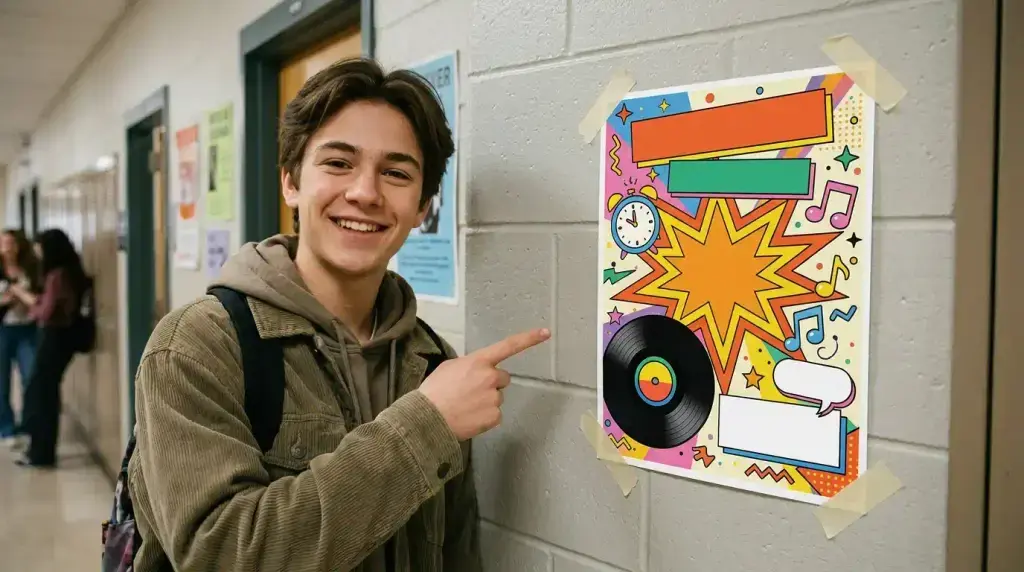
Picture a bright flyer taped to a school hallway wall. It lists a date, a time, and a place. At the bottom, in bold letters, it says, “Be there or be square.”
So what is the be there or be square meaning? It means “come to the event, or you will miss out and seem uncool.” The phrase is playful and informal. It works as a friendly dare, not a real threat.
The words rhyme, which makes them easy to remember. “Be there” means to show up. “Square” is old slang for someone who is dull or out of touch.
People still use this phrase on party invites, posters, and social media posts. It often sounds a little retro, and that is part of the fun. In this guide, you will learn what it means, where it comes from, and how to use it well. You will also see examples, alternatives, and common mistakes.
Quick Answer: What Does “Be There or Be Square” Mean?
“Be there or be square” is a rhyming expression that urges people to attend an event. It means that anyone who stays away will miss the fun and look out of touch.
- Type: rhyming idiomatic expression
- Tone: playful, informal, slightly retro
- Rhyme: there and square end with the same sound
Breaking Down the Phrase

The phrase has only five words. Each one does a clear job.
“Be There”
This part means to attend. It asks people to show up at the place and time you name. Nothing tricky hides here.
“Or”
The word “or” sets up a choice. You can come, or you can face the other option. That choice creates the playful pressure in the phrase.
“Be Square”
Here, “square” is slang. It describes a person who is old-fashioned, dull, or out of step with trends. Nobody wants that label, so the phrase nudges people to attend.
Why It Works
Short phrases stick in the mind. The rhyme also adds rhythm, so the line almost sounds like a tiny song. As a result, it fits well on flyers and posters.
The Joke Behind It
The threat is not real. Nobody will truly call you boring for missing a party. In fact, the speaker usually smiles while saying it. The humor comes from pretending that the stakes are high.
The Meanings of “Square”
The word “square” has many senses. Knowing them helps you avoid mix-ups.
The Slang Sense
In slang, a square is a person who follows the rules and avoids new trends. The word suggests someone stiff or not “hip.” Dictionaries list this as an informal, dated sense.
“Square” as a Noun
As a noun, it names the person. For example, a teenager might say, “My brother is such a square.” It is a mild teasing word, not a harsh insult.
“Square” as an Adjective
As an adjective, it describes ideas or habits. Someone might call a rigid view of music “pretty square.” The sense stays close to “conventional.”
The Shape and Other Meanings
Of course, a square is also a shape with four equal sides. A town square is an open space in a city. In math, to square a number means to multiply it by itself.
“Fair and Square”
This phrase means honest and open. A person who wins “fair and square” wins without cheating. It has nothing to do with the slang sense of dull or old-fashioned.
| Sense | Meaning | Example |
| Slang noun | Dull, conventional person | He called me a square. |
| Slang adjective | Old-fashioned or stiff | That rule feels very square. |
| Shape | Four equal sides | Draw a square on the page. |
| Place | Open area in a town | We met in the town square. |
| Math | Multiply a number by itself | Nine is the square of three. |
| “Fair and square” | Honest | She won fair and square. |
Origin and History
Idiom origins can be hard to prove. This section sticks to what dictionaries and slang references support.
Where the Slang Sense Began
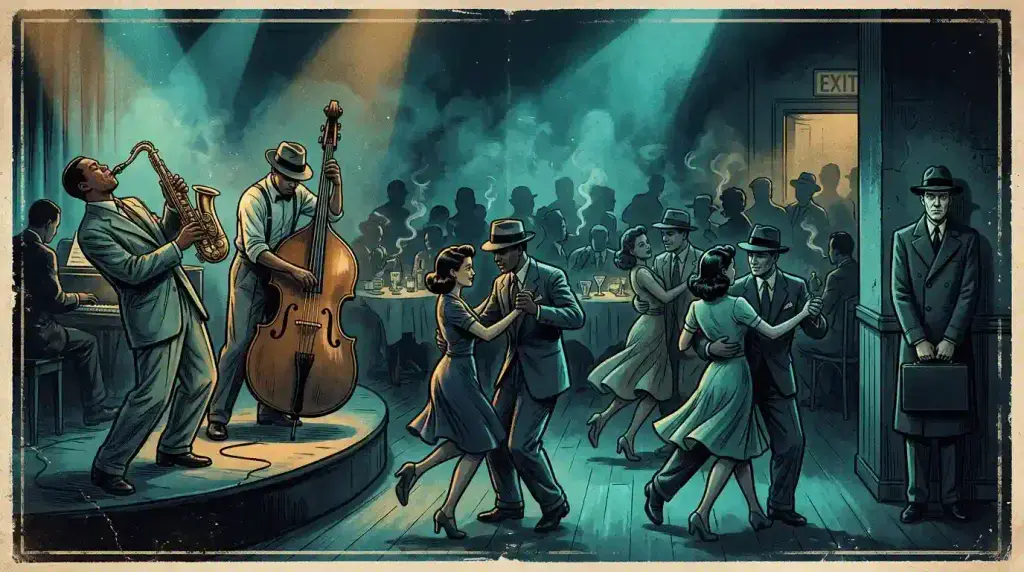
The word “square” took on its “conventional” meaning in the mid-1900s. Many sources link it to American jazz culture of the 1940s. Musicians and fans used it for people who did not share their taste or style.
Earlier Senses of “Square”
Long before that, “square” carried ideas of honesty and fairness. Phrases like “a square deal” show this older sense. Over time, the word also came to suggest someone rigid and traditional.
When the Full Phrase Appeared
The exact date of “be there or be square” is unclear. Reference works do not give one agreed first use. Writers who claim a precise year or inventor should show a real source. Check the OED, Green’s Dictionary of Slang, or Merriam-Webster for any date before you quote it.
How the Phrase Spread
Rhyming slogans travel well. Flyers, radio spots, and ads all favor short, catchy lines. Party invitations and school posters likely helped this phrase reach everyday speech.
How the Tone Changed
At first, “square” was current slang. Today, the word sounds dated. That change gives the phrase a nostalgic charm. Speakers now use it with a wink.
“Be There or Be Square” or “Be There or Be a Square”?
Both versions exist, and they mean the same thing. The shorter form, “be there or be square,” is the classic one. It is tighter and rhymes more cleanly.
The longer form, “be there or be a square,” treats “square” as a noun. It names a person. Still, it feels a bit clunkier when spoken aloud.
If you write your own invitation, choose the short version. It matches what most people expect. However, no rule makes the longer one wrong. Before you publish a claim about which form is more common, check a dictionary or a search corpus.
How and When to Use It
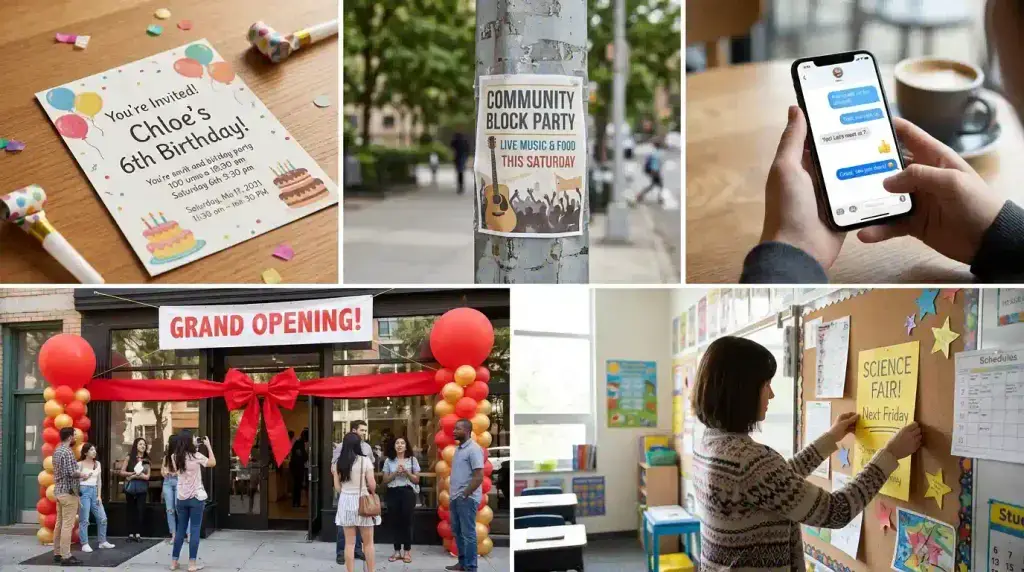
This phrase works best where fun matters more than formality. Here are common settings.
Invitations
Parties, reunions, and school events suit the phrase well. Add it at the end of the invite, after the key details. For example: “Saturday, 7 p.m., my place. Be there or be square.”
Event Promotion
Flyers and posters often close with the phrase. It gives the message a bold final punch. Social media captions can use it the same way.
Texts and Chats
Friends can tease each other with it. A quick “Game night tomorrow, be there or be square” feels warm and light. The playful tone helps keep things friendly.
Marketing and Ads
Brands sometimes use it in retro or humorous campaigns. The phrase signals a relaxed voice. It fits events like sales, concerts, and store openings.
Classroom and Club Announcements
Teachers and club leaders can use it to boost turnout. Keep the tone kind and inclusive. Pair the phrase with clear facts about the date, time, and place.
A Quick Tip
Put the facts first and the phrase last. People need the details to attend. The rhyme then works as a cheerful reminder.
Tone, Register, and Context
The phrase is informal and humorous. It sounds right among friends, classmates, and casual crowds.
The Dated Sound
The word “square” feels old. That sound is often the joke. Speakers choose the phrase because it feels retro, not because they think it is cutting-edge.
Where to Avoid It
Skip it in formal invitations. A wedding card, a business email, or a funeral notice needs a serious voice. The playful dare would feel out of place.
Possible Risks
Some people may feel teased by the “square” label. Others may feel pushed to attend when they cannot. Keep the mood kind, so nobody feels left out.
How Delivery Changes the Feel
A smile in your voice makes the phrase friendly. On a flyer, bright colors and a retro font add to the humor. In a flat text, however, the same words can read as pushy.
Example Sentences and Dialogues
Seeing the phrase in real settings helps it stick.
Example Sentences
- The party starts at eight, so be there or be square.
- We’re holding a game night on Friday, be there or be square.
- The band plays live downtown tonight, be there or be square.
- Our class reunion is next month, so be there or be square.
- The fundraiser needs volunteers on Sunday, be there or be square.
- Grab your friends for the school dance, be there or be square.
- Pizza is free at the club meeting, so be there or be square.
- The sale opens at nine, be there or be square.
Dialogue 1: A Text Exchange
Maya: Are you coming to Leo’s birthday on Saturday?
Sam: Not sure yet. I might be busy.
Maya: Cake, music, and games. Be there or be square!
Sam: Okay, you win. I’ll be there.
Dialogue 2: Planning With Friends
Jon: What time does the movie night start?
Priya: Seven o’clock. Bring snacks.
Jon: Count me in.
Priya: Good. Be there or be square.
Dialogue 3: A Flyer Caption
Sock Hop Saturday!
Gym, 6 p.m. Music, dancing, and snacks.
Be there or be square.
Social Media Captions
- Taco night is back. Be there or be square.
- Our grand opening is this Saturday. Be there or be square.
- Quiz night starts at eight. Be there or be square.
- Bring a friend to the park cleanup. Be there or be square.
- Live music on the patio tonight. Be there or be square.
Similar Phrases and Alternatives
Many phrases invite people to an event. Some share the playful tone, while others sound more modern or more serious.
| Phrase | Meaning | Tone | Best used when |
| Don’t miss out | Come, or you will lose the chance | Neutral | Ads and general invites |
| You won’t want to miss it | The event will be great | Friendly | Parties and shows |
| Be there or miss out | Attend, or lose the fun | Playful | A plainer version of the original |
| It’s going to be epic | The event will be amazing | Casual, modern | Social media posts |
| Don’t be a stranger | Come back and visit often | Warm | Friends, after the event |
| Save the date | Mark your calendar | Neutral | Early notices |
| RSVP | Reply to confirm | Formal | Planned events |
Two Phrases That Differ
You had to be there has a different meaning. It says that a story only makes sense to people who were present. Similarly, FOMO names the fear of missing out. It is a feeling, not an invitation.
Which Ones Fit Modern Readers?
Don’t miss out and it’s going to be epic sound current. On the other hand, “be there or be square” sounds retro. Choose it when you want a playful, nostalgic voice.
Related Phrases and Slang With “Square”
The word “square” appears in many expressions. Their meanings differ, so read each one with care.
| Phrase | Meaning | Example |
| A square | A dull or conventional person | Don’t be such a square. |
| Fair and square | Honest and open | He won fair and square. |
| Back to square one | Back at the start | The plan failed, so we’re back to square one. |
| A square meal | A full, satisfying meal | Eat a square meal before you go. |
| A square deal | A fair deal | The shop gave me a square deal. |
| Square peg in a round hole | A person who does not fit | She felt like a square peg in a round hole. |
| Square up | Settle a bill, or face a rival | Let’s square up after dinner. |
| Square away | Put in order | He squared away his paperwork. |
| Squaresville | A dull place or state (retro slang) | That party was pure Squaresville. |
Notice that most of these phrases use older senses of “square.” They stress fairness, order, or fit. Only “a square” and “Squaresville” share the slang meaning from our main phrase.
Similar Rhyming Idioms and Slang
Rhyme makes language easy to remember. Many English phrases use this trick.
- See you later, alligator: a playful goodbye
- Easy peasy: very simple
- Okey-dokey: a cheerful way to say “okay”
- Hip hip hooray: a cheer of joy
Why Rhyme Helps
Rhymes give phrases rhythm. They are also fun to say aloud. For this reason, slogans, jokes, and invitations often rely on them.
“Be there or be square” belongs in this group. Its sound does half the work, so the meaning lands fast.
Opposites and Contrasts
The phrase has no strict opposite. Still, some words contrast with “square” in slang.
| Word | Note |
| Hip | Up to date and in the know |
| Cool | Stylish and relaxed |
| Trendy | Following the latest fashion |
| With it | Aware of current trends (dated slang) |
The action in the phrase has contrasts too. “Be there” is the opposite of staying away or missing out. In short, the phrase sets “showing up” against “missing out.”
Is It Still Used Today?
Yes, people still say it. However, its feel has changed.
A Nostalgic and Ironic Tone
Today, the phrase often sounds nostalgic or ironic. Speakers know it is old-fashioned. They use it to be funny, not to sound trendy.
Younger Speakers
Younger people may use it as a joke. They might pair it with memes or retro graphics. As a result, the phrase gains a second life online.
Social Media and Marketing
Event posts and brand pages still use it. A retro flyer with this line can charm an audience. It signals fun without much effort.
Why It Has Lasted
Three things help the phrase survive. The rhyme is catchy, the message is simple, and the humor is gentle. Together, these traits keep it alive.
Pop Culture Mentions
Many readers wonder where they have heard this phrase. It shows up in casual speech, ads, and comedy. Even so, naming specific songs, films, or shows needs care. Many online lists repeat claims without proof.
If you want to cite a particular movie or song, find a reliable source first. Check the script, a trusted database, or a major news outlet. Do not rely on a quote site alone.
For this guide, the safest statement is a broad one. The phrase is a familiar part of English-speaking pop culture. It often appears where writers want a retro, playful voice.
Common Mistakes
Even a simple idiom can trip people up. Watch for these slips.
1. Using it in formal settings. A formal invite needs a polite tone. Save the phrase for casual events.
2. Mixing up the senses of “square.” In this phrase, “square” means dull or out of touch. It does not mean the shape or “fair and square.”
3. Misquoting the words. Keep the rhyme clear. “Be there or be square” works better than “be there or you’re a square.”
4. Overusing it. A phrase used in every invite starts to feel like a cliché. Use it now and then, so it stays fresh.
5. Hurting someone’s feelings. Some people may feel teased by the “square” label. Keep the mood warm and kind.
6. Explaining the joke. If you must explain the phrase, it loses its charm. Let the rhyme do the work.
How to Practice

Reading about a phrase helps. Using it helps more. Try these quick exercises.
Quick Exercises
- Write an invite. Draft a short note for a game night, and end it with the phrase.
- Rewrite it formally. Turn “Be there or be square” into a polite sentence.
- Choose the right “square.” Decide if each sentence uses the slang sense or the shape.
- Find the rhyme. List three other phrases that rhyme.
- Spot the tone. Say which event suits the phrase: a picnic or a board meeting?
A Short Challenge
Write three captions for imaginary events. Make one for a concert, one for a bake sale, and one for a movie night. Read them aloud, and check that they sound friendly.
Quick Recap and Cheat Sheet
- Meaning: come to the event, or miss out and seem uncool
- Type: rhyming idiomatic expression
- Tone: playful, informal, retro
- Origin note: “square” meaning “conventional” grew popular in the mid-1900s, and the full phrase has no confirmed first use
- Use it for: parties, flyers, texts, and fun announcements
- Avoid it in: formal or serious messages
- Alternatives: don’t miss out, you won’t want to miss it, it’s going to be epic
- Tip: put the details first and the phrase last
FAQS
What does “be there or be square” mean?
It means you should attend an event, or you will miss out. It also hints that staying away would seem uncool.
Where does the phrase come from?
The slang sense of “square” grew popular in the mid-1900s. The exact first use of the full phrase is not clear.
What does “square” mean in slang?
It means a dull, conventional, or old-fashioned person. The word is dated but still understood.
Is “be there or be square” rude or offensive?
No, it is usually a friendly joke. However, some people may dislike the “square” label, so keep the tone kind.
Is it still used today?
Yes, people use it on invites and posts. It often sounds retro or ironic.
Can I use it in a formal invitation?
No, it suits casual events best. A formal invite needs a more serious voice.
Is it “be there or be a square”?
Both forms exist and mean the same. The short form is the classic version.
What is a modern alternative?
Don’t miss out and it’s going to be epic sound current. Both fit social media well.
What is the opposite of a square in slang?
Words like hip and cool work as opposites. Both describe someone in tune with trends.
Does the phrase rhyme on purpose?
Yes, the rhyme helps people remember it. Catchy sound is a main reason it has lasted.
Conclusion
The be there or be square meaning is simple. It urges people to attend, or they will miss out and seem uncool. The tone is playful, informal, and a little retro.
Context matters most. Use the phrase for parties, flyers, and friendly texts. Skip it for formal events or serious news. Also remember that “square” here means dull, not honest or four-sided.
Try it on your next invitation. Add the details first, then finish with the rhyme. Want more phrases like this? Subscribe to our newsletter, or explore our guides to common English idioms and retro slang words.

Hi, I’m Rebecca Hayes. I write faith-filled articles, healing prayers, and daily devotionals to encourage people in every season of life. My passion is helping readers find peace, hope, and strength through prayer.