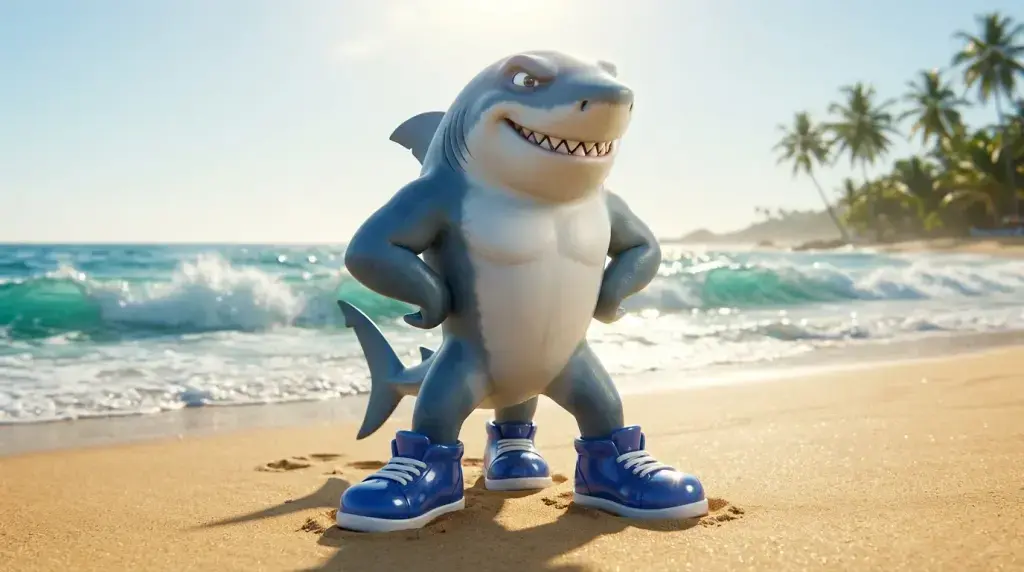
Scroll through TikTok or YouTube Shorts for a few minutes, and you will probably meet a three-legged shark in blue sneakers. A robotic Italian voice chants his name over and over. Millions of people have heard it, yet few know what it means.
So, what is the tralalero tralala meaning in English? Honestly, the phrase has no literal meaning. It is playful, Italian-sounding nonsense, much like “la la la” or “tra-la-la” in English.
Still, the story goes much deeper. The AI-generated shark went viral in early 2025 and helped launch Italian brainrot, a wave of absurd characters with silly names and invented lore.
In this guide, you will learn what the phrase really means, who the shark is, and where he came from. You will also find out why the trend spread so quickly, which characters followed, and how to use the phrase without sounding out of touch.
What Does “Tralalero Tralala” Mean?
Quick answer: “Tralalero tralala” has no literal meaning in English or Italian. It is an invented, rhythmic chant that mimics a sing-song “la la la,” and it is now best known as the name of a viral AI-generated shark.
Breaking down the words
Two parts make up the phrase, and each does a different job.
- “Tralala” is a nonsense syllable of the kind found in songs and rhymes, similar to “tra-la-la,” “fa-la-la,” or “la la la.” It carries a mood (playful and carefree) but has no dictionary definition.
- “Tralalero” is an invented word. Its “-ero” ending is a common Italian suffix, so the name sounds Italian even though it is not a real Italian word.
Common misconceptions
It is not a real Italian phrase. Native speakers do not use it as an expression or proverb, and it is not Italian slang. The meme borrows the sound of Italian, not any meaning.
The name is nonsense, but the audio is not. “Tralalero tralala” itself means nothing. The original sound clip around it, however, contains real Italian words that are profane and offensive, so it is not harmless gibberish. The audio section below covers this in more detail.
It is a name, not a sentence. Online, the phrase refers to the shark character. People use it the way they would use any character’s name.
Meet the Shark: What Is Tralalero Tralala?
Beyond the phrase, Tralalero Tralala is a character: an AI-generated shark that walks on three legs and wears bright blue sneakers resembling Nike shoes. The odd mix of a sea creature, human footwear, and an extra leg makes the image hard to forget.
What he looks like
- Body: a sleek shark with a sharp fin and a wide mouth
- Legs: three, which is the joke most people notice first
- Shoes: blue sneakers, usually described as Nike-style
- Setting: often a beach or open water, where he looks oddly confident
Personality and lore
The original clips offered almost no backstory, so fans filled the gap themselves. In fan-made lore, he is an athletic hero who runs at superhuman speeds and jumps to impossible heights. Other versions cast him as a rival of fellow characters or as the star of a mock-epic battle. None of this is official, and that is part of the fun.
The AI look and sound
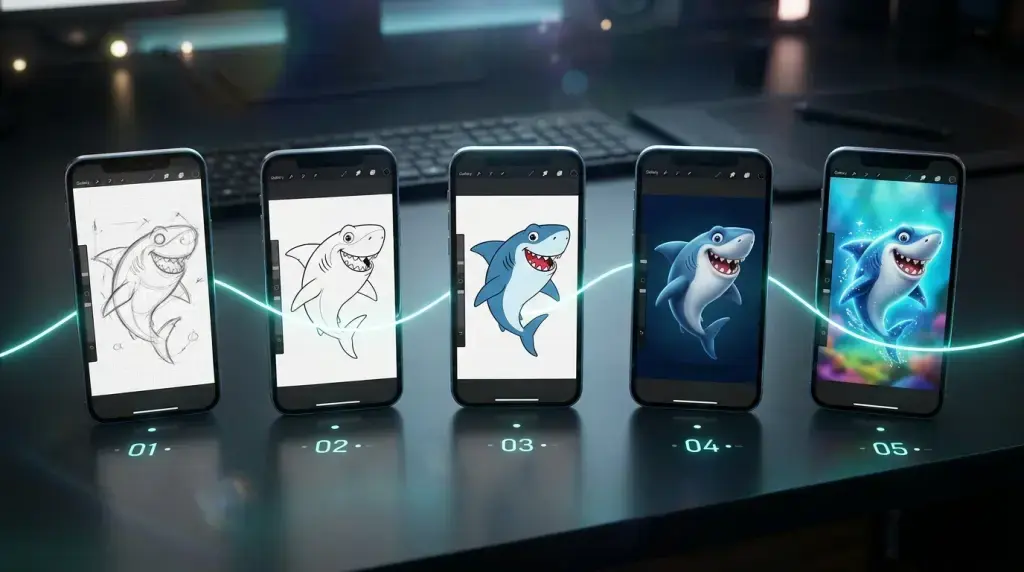
Creators built the character with AI image and video tools, and the audio uses an Italian-sounding text-to-speech voice. That slightly glitchy style became a signature of Italian brainrot.
Absurd on purpose
The shark is not meant to make sense. Its humor comes from a deliberately silly design paired with serious, dramatic narration. As a result, the character is easy to remix and share.
Origin and History
The exact origin of Tralalero Tralala cannot be pinned down. According to Wikipedia, its creation is often attributed to TikTok user @eZburger401, who reportedly posted a video featuring it in January 2025. Know Your Meme notes that this account has since been banned, which makes the original post hard to verify.
Timeline
- Early January 2025: The original video paired an AI-generated shark in Nike shoes with a male Italian text-to-speech voice.
- January 8, 2025: Another user, @elchino1246, reused the audio with an image of a shark mixed with a pigeon.
- January 13, 2025: User @amoamimandy.1a posted a video with an AI image of a shark wearing shoes. It reportedly gained 7 million views before being deleted, and it is the version most people picture today.
- Late March 2025: The meme took off on TikTok and YouTube.
- Spring 2025 onward: New characters followed, and Tralalero Tralala is widely considered the first example of the trend.
Who really created it?
Treat authorship as unsettled. Different sources credit different accounts for the audio and for the shark image. Meanwhile, early posts have been deleted or banned, which is why many outlets use words like “reportedly” and “credited to.”
After those first clips, the shark spawned remixes, fan art, and endless lore. He soon became a regular in games, edits, and merchandise.
What Is Italian Brainrot?
Brainrot, defined
“Brainrot” is internet slang for silly, low-effort content that people cannot stop watching. The term is usually half joke and half self-mockery. Viewers know the content is dumb, and they keep scrolling anyway. Oxford University Press even named “brain rot” its 2024 Word of the Year.
The Italian brainrot formula
Italian brainrot features bizarre AI-generated creatures with fake Italian names and dramatic voiceovers. Most characters follow the same recipe:
- A hybrid design: an animal or object fused with something unrelated
- A pseudo-Italian name: rhythmic, with endings like -ino, -illo, and -ini
- A serious voice: dramatic narration that clashes with the absurd image
- Fake lore: invented rivalries, powers, and backstories, mostly written by fans
Not all of it is Italian
The label is looser than it sounds. Tung Tung Tung Sahur, for example, is counted as Italian brainrot but has Indonesian origins, and its character was reportedly first made by @noxaasht in February 2025. In other words, “Italian” describes a style of naming and narration rather than a country of origin.
A global trend
Italian brainrot gained notoriety in the United States, South Korea, and Germany, among other places. Its characters have also been used to sell toys and NFTs, and the trend even inspired volatile meme coins.
Why Italian?
Italian works as a joke language because English speakers tend to hear it as musical and dramatic. That suits mock-epic narration perfectly. Of course, this is an interpretation rather than a proven fact.
The Language Behind the Name
Why it sounds Italian
“Tralalero” works because of its ending. Words that end in vowels, such as -o, -ino, -ini, and -a, sound Italian to English-speaking ears. Adding them to almost any word makes it feel Italian.
The same trick appears across the trend, from Bombardiro Crocodilo to Ballerina Cappuccina and Chimpanzini Bananini. Most of the names are real words, or English words, dressed up with Italian-style endings.
Is any of it real Italian?
The phrase as a whole is not, but it was not invented from nothing either. Italian folk music includes sing-song refrains built from similar syllables, much like “fa-la-la” in English. Genoa even has a polyphonic folk singing style called trallalero, although it has no connection to the meme. The meme borrows the sound of that sing-song tradition, not its meaning.
Nonsense refrains in English
English has plenty of its own, including “fa-la-la,” “doo-wop,” “na-na-na,” and “hey nonny nonny.” These refrains exist to carry rhythm and mood. Meaning plays almost no part.
Why it sticks
The phrase is short, repetitive, and easy to say out loud. Its repeated “-la” sounds are fun to chant, so the name spreads by ear as much as by image.
The Audio, Song, and “Lyrics”
What the audio is
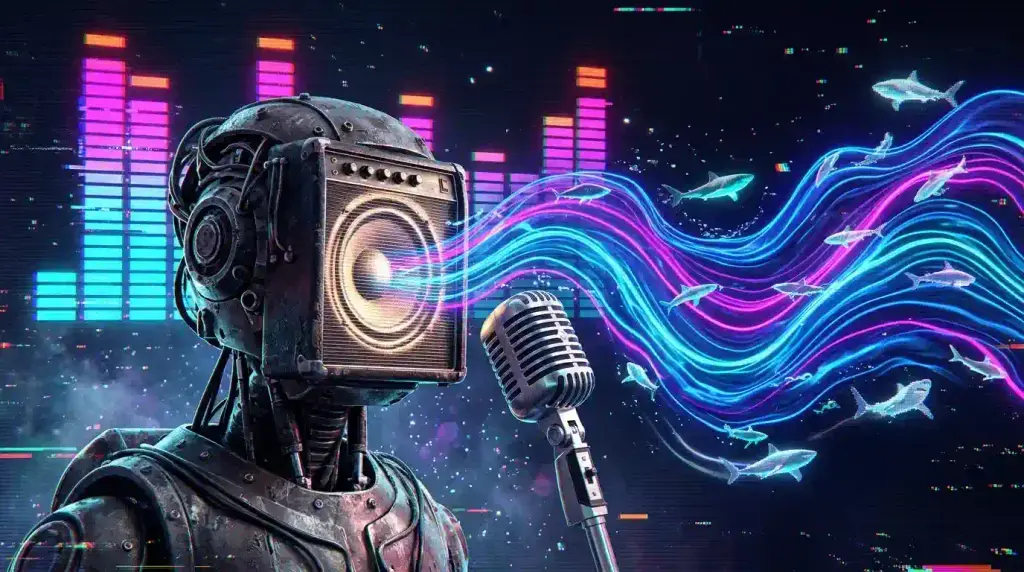
The sound behind the meme is not really a song. According to Know Your Meme, it is a male Italian text-to-speech voice reciting a short rhyme that opens with the chant “Tralalero Tralala.” The robotic delivery is part of the joke, and it became the template for later Italian brainrot characters.
Why this article does not print the lyrics
The chant is harmless, but what follows it is not. The spoken rhyme mixes the chant with profanity, and some critics have accused the memes of being Islamophobic because the lyrics mock Allah. For that reason, the rest of the audio is neither quoted nor translated here. Readers who want the full text can look it up on a documentation site such as Know Your Meme.
How it became a sound trend
The sound spread through many TikTok users, and a phonk remix became widely used in anime and soccer edits. Over time, the clip drifted away from its original context. Many people who use the audio today know it only as “the shark song.”
Remixes and rights
Because the original is a short text-to-speech clip from a banned account, no clear rights holder has emerged, and remixes spread freely. Still, creators who build full tracks on top of it should check the rules on TikTok, YouTube, and Spotify before monetizing anything. This is general information, not legal advice.
Meet the Other Italian Brainrot Characters
Tralalero Tralala started the trend, but he did not carry it alone. Bombardiro Crocodilo, Lirili Larila, and many other absurd characters soon followed. Here are the best-known ones.
| Character | What it is | Where it came from | Link to Tralalero |
| Bombardiro Crocodilo | A crocodile head fused with a World War II bomber | A February 2025 TikTok, credited to @armenjiharhanyan | Arrived a month after Tralalero; the two became the genre’s flagship figures |
| Tung Tung Tung Sahur | A wooden plank holding a baseball bat | Indonesian in origin, reportedly made by @noxaasht in February 2025 | Counted as Italian brainrot even though it is not Italian |
| Ballerina Cappuccina | A ballerina with a cappuccino mug for a head | Posted by @aironic.fun on March 19, 2025 | In fan lore, she cheated on her fiancé with Tralalero |
| Chimpanzini Bananini | A chimpanzee fused with a banana | Its TikTok hit 29 million views in two weeks | Fans often debate who would win against Tralalero and Bombardiro |
| Lirili Larila | A cactus-elephant hybrid in sandals who can control time | Debut date unclear | Appears alongside Tralalero in fan-made brainrot videos |
The shared formula
Each character follows the pattern Tralalero set: a hybrid design, a rhythmic pseudo-Italian name, and a robotic voice. Related figures include Bombombini Gusini, a goose-jet hybrid billed as Bombardiro’s brother, and Trippi Troppi, a cat-shrimp hybrid.
A note on tone
The characters vary in how harmless they are. Ballerina Cappuccina is gentle, whereas Bombardiro Crocodilo has been criticized for narration that makes light of the Gaza conflict. Keep that difference in mind when recommending characters to younger readers.
Why It Went Viral
The joke is that there is no joke
Absurdity is the main draw. Italian animator Fabian Mosele, who makes brainrot videos, has said that Gen Z and Gen Alpha humor leans absurdist, and the appeal is simply that it is weird. Nothing needs explaining, which makes the clips instantly shareable.
Easy to mimic and remix
Mosele also points to Italian’s playful sound, nonsense humor, and nursery-rhyme rhythms as easy to copy. Because the formula is so simple, anyone can invent a new character. The trend therefore spread through participation rather than a single viral video.
Built for short-form video
Each clip is quick, loud, and understandable within seconds, which suits TikTok and YouTube Shorts perfectly. One analyst described the trend as content made for instant consumption, where audiences show they are in on the joke. The numbers back this up, since Ballerina Cappuccina alone passed 55 million TikTok views.
A Gen Alpha shared language
The videos look meaningless to adults, yet they work as cultural touchstones for kids born between 2010 and 2025. Children use them as shared jokes and references. Some teachers have even reported students shouting the phrases in class, although most parents find it harmless.
Part of a bigger pattern
Italian brainrot has company. Similar absurdist trends include the Skibidi Toilet series and videos that pair Subway Surfers gameplay with random clips. The trend also crossed into gaming through the Roblox hit Steal a Brainrot.
What parents and experts say
Experts are mostly relaxed. Researchers quoted in news reports say the content itself is not harmful, and the main concern is how much time kids spend scrolling. A few experts do worry that algorithms could steer children toward darker brainrot content, so occasional check-ins are sensible.
Cultural Impact
Memes, music, and fan lore
The trend produced far more than jokes. A phonk remix of the Tralalero audio spread through anime and soccer edits, and creators later mashed brainrot songs into new viral sounds. Meanwhile, fans built storylines, rivalries, and even romances for the characters.
Games
The biggest crossover is gaming. Steal a Brainrot, in which players collect characters, became one of Roblox’s most popular games in summer 2025. For many kids, the characters shifted from something to watch into something to play.
Merchandise and brands
Toys, NFTs, and meme coins all borrowed the characters’ likenesses, and Panini reportedly released an Italian brainrot sticker album in 2025. Brands also tried to ride the wave to capture Gen Z and Gen Alpha attention, even if only for a few seconds. By 2026, however, only a few were still making content with the characters.
Ownership disputes
Where there is money, legal fights follow. The maker of Steal a Brainrot has reportedly moved to invalidate any copyright for Tung Tung Sahur, while a French company has countersued over trademark infringement. The case raises a bigger question about who owns AI-generated characters.
Controversy and criticism
- Offensive audio: Tralalero Tralala and Bombardiro Crocodilo memes have been accused of Islamophobia, since some lyrics mock Allah.
- Bombardiro Crocodilo: The character has been criticized for narration that makes light of the Gaza conflict.
- “AI slop”: Some users use the brainrot label to acknowledge both the ridiculousness of the content and the growing amount of AI slop online.
Is It a Fad? Brainrot and the Future
The peak has passed
The evidence points to a clear decline in the original TikTok wave. One wiki entry says the trend spread widely in March and April 2025 and then faded quickly in mid-to-late May. Animator Fabian Mosele’s history agrees that it was slowly toning down by the end of summer 2025. In early December, the official Italian Brainrot Instagram page even posted a reel of the characters’ graves, which many read as an official farewell.
But it did not disappear
One analysis argues that the trend survived by spreading across layers: the Roblox game, physical merchandise, and ongoing YouTube content. Mosele notes that much of the popularity was kept alive by Steal a Brainrot. Brands, on the other hand, mostly moved on.
How it compares to other fads
Most memes vanish once the joke is exhausted. Italian brainrot is closer to a character franchise, with recognizable faces and shared lore, and that gives it a longer tail. As one parenting site put it, Tralalero Tralala was the star of 2025’s wave and still gets love in 2026.
A cultural pendulum
One magazine suggests culture is swinging away from 15-second content toward book clubs and long-form reading. That may be wishful thinking, and it is only one writer’s view.
What it says about AI culture
Italian brainrot showed how cheaply anyone can produce a character that spreads worldwide. Expect more trends built the same way. As of November 2026, the shark is no longer the center of the internet, but he has secured his place in meme history.
How to Use “Tralalero Tralala” Correctly
When it works
Treat it as a reaction, not a sentence. The phrase works best when something is silly, chaotic, or pointlessly dramatic, and you want to nod to the meme without explaining it.
Example captions
- When the group chat goes off topic: “tralalero tralala”
- Posting a photo of your new sneakers: “Tralalero Tralala energy today.”
- Replying to a ridiculous plan: “Tralalero tralala, let’s do it.”
- Describing a messy day: “Today was three legs and blue sneakers.”
Do
- Keep it short and playful. A single emoji or a one-liner is enough.
- Know your audience. It lands best with Gen Z, Gen Alpha, and people who follow meme culture.
- Use it as a name. References to the shark character work well.
- Pair it with visuals. A sneaker photo, a shark emoji, or a beach scene makes the joke clearer.
Do not
- Do not repeat the full audio. The original clip includes profane and religiously offensive lines, so avoid quoting it, especially in public posts or around children.
- Do not explain the joke. Over-explaining kills it.
- Do not force it into formal settings. Work emails and school assignments are not the place.
- Do not treat it as real Italian. Using it to sound Italian can come across as mocking the language.
Fun Facts
- The first shark had pigeon legs. An early reuse of the audio, posted on January 8, 2025, paired it with an AI image of a shark and pigeon mix. The Nike shoes came later.
- The famous shoe video reportedly had 7 million views. It was posted on January 13, 2025, and has since been deleted.
- The original poster got banned. The TikTok account credited with the first Tralalero Tralala video was later removed.
- Not every “Italian” character is Italian. Tung Tung Tung Sahur is Indonesian in origin.
- Ballerina Cappuccina went huge. She racked up more than 55 million TikTok views in early 2025.
- Chimpanzini Bananini spread at record pace. Its TikTok reached over 29 million views in two weeks.
- “Brain rot” was the 2024 Word of the Year. Oxford University Press chose it just before the trend exploded.
FAQS
1. What does tralalero tralala mean in English?
It has no literal meaning. It is an invented, Italian-sounding chant, similar to “la la la” or “tra-la-la.” Online, it is the name of an AI-generated shark with three legs and Nike sneakers.
2. Is tralalero tralala a real Italian word?
No. It is a made-up phrase that imitates the rhythm of Italian. Italian folk music has similar sing-song refrains, but “tralalero tralala” is not a dictionary word or an everyday expression.
3. Who created tralalero tralala?
That is unclear. Wikipedia says the creation is often attributed to TikTok user @eZburger401, who reportedly posted it in January 2025. The account has since been banned, so the original post is hard to verify.
4. Why does the shark have three legs and sneakers?
There is no official reason. The mismatched design is deliberately absurd, and absurdity is the joke. The shoes appeared in a January 13, 2025 video that reportedly gained 7 million views.
5. What is Italian brainrot?
It is a meme trend of bizarre AI-generated creatures with fake Italian names and dramatic voiceovers. Tralalero Tralala is widely considered the first example.
6. What are the other Italian brainrot characters?
Popular ones include Bombardiro Crocodilo, Tung Tung Tung Sahur, Ballerina Cappuccina, Chimpanzini Bananini, and Lirili Larila. The character section above explains each one.
7. Is tralalero tralala AI-generated?
Yes. The original video used an AI-generated image with a male Italian text-to-speech voice. Most characters in the trend are made the same way.
8. Where can I find the original video?
The original account was banned, so the first upload is no longer available. Know Your Meme documents the early videos and the accounts that reposted them.
9. Why are kids obsessed with it?
The humor is absurd, short, and easy to imitate. It also works as a shared joke among friends, which makes it feel like an inside language.
10. Is it safe or appropriate for children?
Mostly harmless, with a caveat. Researchers say the content itself is not harmful, and the main concern is screen time. However, the original audio mixes the chant with profanity, so parents may want to check which clips their kids watch.
Conclusion
“Tralalero tralala” has no literal meaning, but it carries a lot of cultural meaning. A nonsense chant, a three-legged shark in blue sneakers, and a robotic Italian voice were enough to start Italian brainrot, a trend that reached billions of views, a hit Roblox game, and a legal fight over who owns AI-made characters.
The phrase also shows how internet culture works now. Anyone with free AI tools can make a character, and the audience decides whether it spreads. Whether you find it hilarious or exhausting, it is a useful snapshot of how Gen Alpha communicates.
So what is your favorite Italian brainrot character? Tell us in the comments, and explore our related posts on meme slang and AI trends for more.

Hello, I’m Clara Whitmore. I write daily prayers, devotionals, and faith-based reflections for readers seeking peace and encouragement. I believe prayer has the power to heal hearts and renew faith.