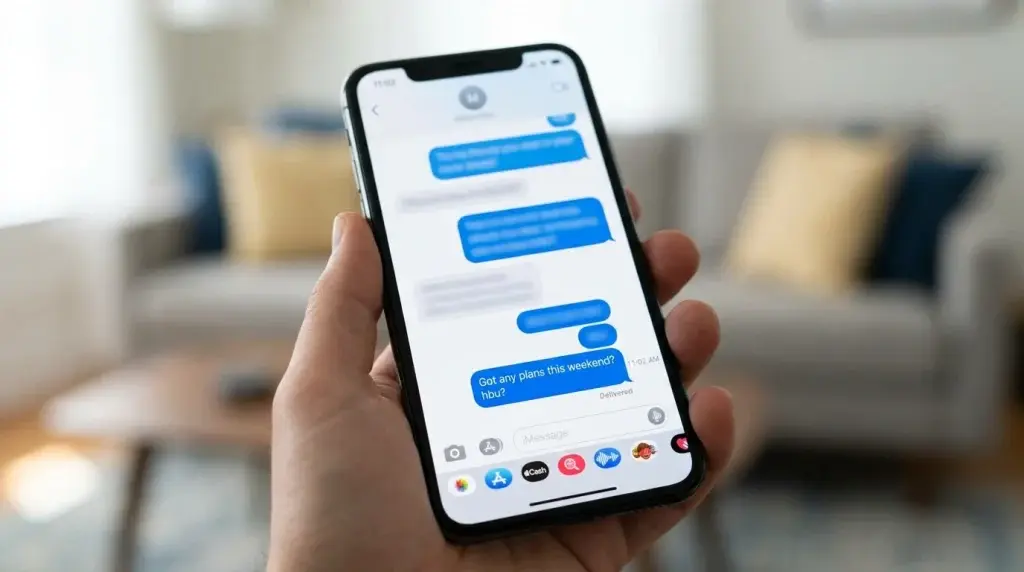
You are chatting with a friend. They send a quick message about their day. Then they add three letters and a question mark: “hbu?” If you have ever stared at that and wondered what it means, you are not alone. The hbu meaning in text is simple. It stands for “how about you?” People use it to ask you the same question they just answered.
It keeps a chat going and shows you care. In this guide, you will learn what hbu means, how to use it, and when it fits.
You will also see real examples, common mistakes, and a few other texting terms that work the same way. By the end, you will know how to read it and reply with confidence.
Quick Answer: HBU Meaning in Text
HBU means “how about you?” It is a short way to turn a question back to the other person. Someone answers a question, then adds “hbu?” to ask for your answer too.
Here is a simple example:
Friend: I’m good, just tired. hbu?
You: Same here. Long day at school.
Your friend shared how they feel. Then they asked how you feel. That is all it does. It is polite, friendly, and fast.
You will mostly see hbu in text messages, direct messages, and chat apps. You will also see it in comments on social media. It is casual, so it fits best with friends, classmates, and people your age or close to it.
What Each Letter Stands For
Slang like this can look like a secret code at first. But it follows an easy pattern. Each letter is the first letter of a word.
| Letter | Word | Part of the Phrase |
| H | How | Starts the question |
| B | About | Links back to the last question |
| U | You | Points the question at the reader |
The letter “u” is a common stand-in for “you” in text speak. People started using it because it is faster to type. You will see it in many other short phrases too.
Why People Say HBU
Think about a real talk with a friend. One person says, “I’m doing great. How about you?” That is normal and kind. Texting works the same way, but people want to type less. So “how about you?” got squeezed down to “hbu.”
There are a few reasons people like it.
First, it is quick. Typing three letters takes a second. This matters when you are on a phone with small keys.
Second, it keeps chats balanced. Without it, one person can end up doing all the talking. Adding “hbu” gives the other person a turn.
Third, it feels friendly. When you ask “hbu,” you tell the other person you want to hear about them. That small step can make a chat feel warmer.
Fourth, it matches the way people text. Short chats move fast. A long, formal sentence can feel out of place in a quick back-and-forth.
Where Does HBU Come From?
Many people want to know who first typed “hbu.” The honest answer is that no one knows for sure. There is no trusted record of the first person to use it, and it is best not to guess.
What we can say is that it grew out of text message habits. Early mobile phones had limits on message length, and typing took effort. So people made short forms for common phrases. “LOL,” “BRB,” and “IDK” are good examples. “HBU” fits right into that family.
Later, social media and chat apps made these short forms even more popular. Today, many young people use hbu without even thinking about it.
How to Use HBU Correctly
Using hbu is easy, but a few small rules help you sound natural.
Use it after you answer. The best time to say hbu is right after you share your own answer. For example: “I’m doing okay, just busy. hbu?” This shows you did not just ask and run.
Ask it as a question. Most people add a question mark. It is not required, but it makes your meaning clear. “hbu?” looks cleaner than “hbu.”
Keep the case simple. You can write it in lowercase, like “hbu,” or in capital letters, like “HBU.” Both are fine. Lowercase feels more relaxed. Capitals can feel louder or more excited.
Match the topic. Hbu works best when the last question is easy to repeat. If someone asks, “What did you eat for lunch?” then “hbu?” makes sense. If someone asks a deep or personal question, a full sentence may feel kinder.
Know your audience. It is fine with friends. With a boss, a teacher, or a client, it is safer to type the full phrase.
Real Life Examples of HBU in Text
Seeing examples is the best way to learn. Here are some common situations.
Checking in on a friend
Sam: Hey! I’m good, just watching a show. hbu?
Jordan: Nice! I’m just doing homework.
Talking about weekend plans
Ava: I’m going to the park on Saturday. hbu?
Mia: Not sure yet. Maybe the movies.
Sharing favorites
Leo: My favorite pizza is pepperoni. hbu?
Chris: Cheese for me, always.
Chatting with someone new
Taylor: I just moved here last month. hbu?
Riley: I’ve lived here my whole life.
Replying to a “how are you” message
Dana: I’m doing fine, thanks for asking. hbu?
Pat: Pretty good, just glad it’s Friday.
In every example, the person answers first. Then they hand the conversation to the other person. This is the heart of how hbu works.
HBU vs. Similar Texting Terms
Hbu has some cousins in the slang world. They look alike, so people sometimes mix them up. This table can help.
| Term | Full Meaning | When People Use It |
| HBU | How about you? | After answering, to ask the same thing back |
| WBU | What about you? | Almost the same as HBU, just a different wording |
| HRU | How are you? | To start a chat and ask how someone feels |
| WYD | What are you doing? | To ask what someone is doing right now |
| HMU | Hit me up | To ask someone to contact you |
| IDK | I don’t know | To say you are not sure |
The closest match is WBU. Both mean the same thing in daily use. You can pick the one that feels more natural to you.
The one people confuse most is HMU. It does not mean “how about you.” It means “hit me up,” which is an invitation to reach out. So “hbu” and “hmu” are not the same, even though they share two letters.
Is HBU Rude or Polite?
Hbu is polite. It shows interest in the other person. Most people read it as friendly.
Still, tone can change from one chat to another. A few things can make it feel cold or lazy.
If someone sends a long, thoughtful message and you only reply “hbu?” without sharing anything, it can feel flat. You asked about them, but you skipped your own part.
If someone is sharing bad news, “hbu?” can feel too casual. In that case, a kind full sentence works better. You might say, “I’m so sorry to hear that. Do you want to talk about it?”
In the end, hbu is a small tool. It is kind when you use it with care.
Common Mistakes to Avoid
Even simple slang can trip people up. Here are the mistakes you will see most often.
Mixing it up with HMU. As you saw above, these are two different phrases. One asks about the other person. The other asks them to contact you.
Using it in formal writing. Emails to a boss, school papers, and job applications are not the place for hbu. Write “how about you?” in full.
Using it with no answer first. If you start a chat with “hbu?” and have not asked or answered anything, it will confuse people. It only makes sense as a reply.
Overusing it. If every message ends with “hbu?” it can sound like a habit instead of real interest. Mix it up. Ask a more specific question now and then.
Forgetting to answer when it is sent to you. If someone asks “hbu?” and you only say “ok,” the chat can fall flat. Share a little. A few words go a long way.
Do Other Meanings of HBU Exist?
In almost every case, hbu means “how about you?” That is the meaning you should expect in a text, a direct message, or a comment.
Sometimes, short letter groups can have a rare second meaning. A friend might make up their own use. A gaming group might have an inside joke. But those are not common, and there is no strong, trusted source that shows another widely used meaning for hbu.
If you ever feel unsure, look at the message before it. Hbu almost always follows an answer to a question. If it does not fit that pattern, just ask: “Do you mean how about you?” There is no shame in checking. It is better than guessing wrong.
Where You Will See HBU Online
Hbu shows up in many places. Here is a quick look at where.
| Platform or Place | How It Is Used |
| Text messages (SMS, iMessage) | Quick check-ins between friends and family |
| Chat apps (WhatsApp, Snapchat, Messenger) | Casual back-and-forth chats |
| Social media DMs (Instagram, TikTok) | Starting or keeping a friendly talk |
| Gaming chats and Discord | Short, fast talk during play |
| Comment sections | Answering a question, then asking others to share |
Since it is so short, it fits best on fast, mobile-first apps. You will see it less often in long emails or on work platforms.
Tips for Replying When Someone Sends You HBU
Getting an “hbu?” is a small invitation. Here is how to answer well.
Be honest and brief. You do not need to write a long paragraph. One or two lines are fine. “Pretty good, just relaxing at home” works great.
Add a little detail. Instead of “fine,” say “fine, just got back from the gym.” Details give the other person something to respond to.
Ask a new question. If you want the chat to keep going, end with a fresh question. For example: “I’m doing well! Did you finish that project?”
Match their mood. If they are excited, share some energy. If they seem down, be gentle.
Skip the guilt. If you are busy, it is okay to give a short answer. Just be kind about it.
Best Practices for Using HBU in Your Own Chats
If you want to use hbu well, keep these simple habits in mind.
Answer first, then ask. This makes the exchange feel fair and real.
Use it with people you know. Friends, classmates, and family are a good fit.
Switch to full words in serious or formal talks. This shows respect.
Use other words sometimes. Variety keeps you from sounding like a robot. You can say “what about you?” or “how’s your day going?” to mix it up.
Pay attention to the other person. If they use full sentences and a formal tone, follow their lead.
Is HBU Still Popular Today?
Yes, hbu is still widely understood and used. You can see it in everyday chats among teens and adults. It has stayed useful because the need behind it never goes away. People always want to ask each other how they are doing.
That said, slang changes fast. Some short forms fade over time. Others stay for many years. Hbu has lasted because it is simple and it serves a clear purpose. It is not tied to one trend or one app. There are no reliable numbers on exactly how often people use it, so it is best to simply say that it remains common in casual texting.
FAQs
1. What does hbu mean in text?
Hbu means “how about you?” People use it to ask you the same question they just answered.
2. Is hbu the same as wbu?
Yes, in daily use they mean almost the same thing. Hbu is “how about you?” and wbu is “what about you?” Both ask the other person to share.
3. Can I use hbu in an email?
It is best not to. Hbu is casual slang. For work or school emails, write out “how about you?” or use a friendlier full sentence.
4. Do I have to use a question mark with hbu?
No, but most people do. A question mark makes it clear that you are asking something. It also makes the message easier to read.
5. What is the difference between hbu and hmu?
Hbu means “how about you?” Hmu means “hit me up,” which asks someone to contact you. They are different phrases, even though they look alike.
6. How should I answer if someone sends me hbu?
Share a short, honest answer to the question they asked before. Then, if you want, ask them something new to keep the chat going.
Conclusion
Now you know the hbu meaning in text. It simply means “how about you?” and it helps people share the spotlight in a chat. It is short, friendly, and easy to use once you see the pattern. Answer the question first, then add “hbu?” to invite the other person to share.
Remember a few key points. Use it with friends, not in formal writing. Do not mix it up with “hmu.” And always give a real answer when someone sends it to you. A tiny bit of care turns a quick text into a real connection.
Next time you see “hbu?” on your screen, you will not have to wonder. You can smile, answer, and keep the talk going.

Hi, I’m Elias Monroe. I enjoy writing meaningful prayer content that helps people feel calm, hopeful, and spiritually strong. My goal is to share words that bring comfort during both joyful and difficult times.