
Have you ever seen the phrase “level of education” on a job application or school form and paused? You are not alone. The level of education meaning is simply the highest stage of schooling a person has finished, like high school, college, or a graduate degree. This short guide will explain what it means, why it matters, and how to answer it correctly on forms, resumes, and surveys. By the end, you will feel confident every time this question pops up.
Quick Answer
Level of education means the highest grade, degree, or certificate a person has completed in school. It shows how far someone has gone in their studies, from elementary school all the way up to a doctorate degree. Employers, schools, and government forms use this term to sort people by their academic background. It is not about how smart someone is. It is simply a record of finished schooling.
What Does “Level of Education” Mean?
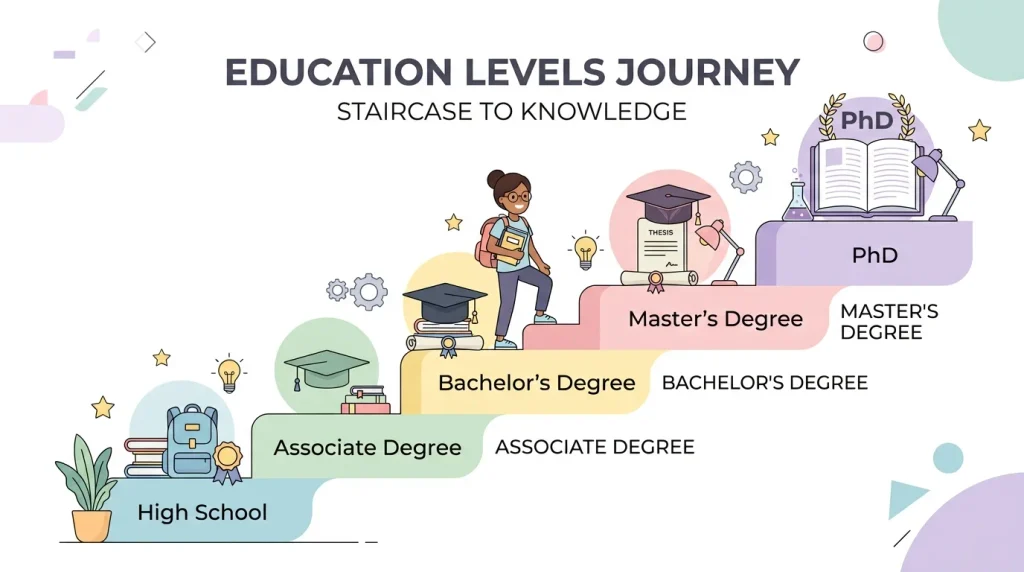
The phrase “level of education” describes a stage or step in the school system. Think of education like a staircase. Each step is a new level. You start at the bottom with early schooling, and you can keep climbing as high as you want.
When someone asks for your level of education, they want to know the last step you fully completed. If you finished high school but did not go to college, your level of education is “high school diploma.” If you finished a four-year college degree, your level is “bachelor’s degree.”
This term shows up everywhere. You will see it on job applications, school enrollment papers, immigration forms, and even surveys from the government. It helps people quickly understand your academic background without reading your whole life story.
It is important to know that the level of education is different from “field of study.” Level of education tells how far you went in school. Field of study tells what you studied, like nursing, business, or engineering. Both pieces of information matter, but they answer different questions.
Levels of Education Explained
Education levels can look a little different depending on the country, but in the United States, there is a common order that most people follow. Here is a simple table to help you see the full picture.
| Education Level | What It Means | Typical Age Completed |
| Elementary School | Grades 1 through 5 or 6 | 10-12 years old |
| Middle School | Grades 6 through 8 | 13-14 years old |
| High School Diploma | Grades 9 through 12 | 17-18 years old |
| Some College (No Degree) | College classes started but not finished | Varies |
| Associate Degree | 2-year college degree | 19-20 years old |
| Bachelor’s Degree | 4-year college degree | 21-22 years old |
| Master’s Degree | Graduate degree after a bachelor’s | 23-25 years old |
| Doctorate (PhD or similar) | Highest academic degree | 27+ years old |
Each step builds on the one before it. You cannot skip straight to a master’s degree without finishing a bachelor’s degree first. This is why the term “level” fits so well. It is a ladder, and each rung depends on the one below it.
Some people also earn trade certificates or vocational training instead of a college degree. These are sometimes listed separately, but they still count as an important level of education, especially for jobs in skilled trades like plumbing, electrical work, or car repair.
Why Level of Education Matters
You might wonder why anyone cares about this information at all. There are a few honest reasons.
First, many jobs require a certain level of education before you can even apply. A nursing job, for example, usually needs at least an associate degree. A teaching job often needs a bachelor’s degree plus a teaching certificate. Employers use this information to quickly filter who qualifies for a role.
Second, schools and colleges use it to understand who is applying. If you are applying to a graduate program, the school needs to know you already hold a bachelor’s degree. Without that basic level, you would not be able to move forward in the application process.
Third, the government tracks levels of education across the country. This data helps leaders understand trends, like how many people finish high school or how many go on to earn college degrees. It also helps schools get proper funding based on community needs.
Finally, the level of education can affect your paycheck. On average, people with higher levels of education tend to earn more money over their lifetime. This is not true in every single case, but it is a common pattern seen in wage reports from the U.S. Bureau of Labor Statistics.
Level of Education on Job Applications and Forms
When you fill out a job application, you will almost always see a field asking for your level of education. This is one of the most common places this term appears.
Here is how to answer it correctly. List the highest level you have fully completed, not the one you are currently working toward. If you are halfway through a bachelor’s degree, your level of education is still “high school diploma” or “some college,” depending on the form’s options. Once you finish the degree, then you can update it to “bachelor’s degree.”
Many forms give you a dropdown list to choose from. Common choices include:
- Less than high school
- High school diploma or GED
- Some college, no degree
- Associate degree
- Bachelor’s degree
- Master’s degree
- Professional degree (like law or medicine)
- Doctorate degree
Pick the option that matches your finished education, not your goals or plans. Being honest here matters because many employers check your education records before hiring you.
Common Mistakes When Listing Level of Education
Even though this seems simple, people make small mistakes often. Let’s look at a few of the most common ones so you can avoid them.
One mistake is listing a degree you have not finished yet. If you are still in school working on your bachelor’s degree, you should not check the box for “bachelor’s degree.” Instead, choose “some college” and mention your expected graduation date separately if the form allows it.
Another mistake is confusing a certificate with a degree. A certificate program, like a six-month course in medical billing, is not the same as an associate or bachelor’s degree. These are valuable skills, but they belong in a different category in most forms.
Some people also forget to update older resumes. If you earned a new degree after college, but your resume still says “high school diploma,” you are underselling your own hard work. Always keep your listed level of education current.
Lastly, people sometimes leave this field blank because they feel unsure. It is always better to choose the closest accurate answer than to leave it empty, since blank answers can look like missing information on official forms.
Real-Life Examples
Let’s look at a few simple examples to make this even clearer.
Maria finished high school and then took two years of college classes at a community college, earning an associate degree in business. Her level of education is “associate degree.”
James went straight from high school into a four-year university and graduated with a degree in computer science. His level of education is “bachelor’s degree.”
Aisha finished her bachelor’s degree and then went back to school two years later to earn a master’s degree in public health. Her level of education is now “master’s degree.”
Tom did not finish high school, but later earned his GED certificate at age 20. His level of education is listed as “high school diploma or equivalent,” since a GED counts the same as a diploma on most forms.
These examples show that the level of education is really just a snapshot of someone’s finished schooling journey, no matter how they got there.
Level of Education vs Other Common Terms
People often mix up a few terms that sound similar but mean different things. This table breaks down the differences clearly.
| Term | What It Really Means |
| Level of Education | The highest stage of schooling completed |
| Field of Study | The subject someone studied, like biology or law |
| Degree Type | The specific credential earned, like a BA or BS |
| Grade Level | The current year in school, like 9th grade |
| Educational Attainment | Another phrase meaning the same thing as level of education |
Knowing these differences helps you fill out forms correctly and avoid confusing your background with unrelated details.
Tips for Choosing How to List Your Education Level
Here are a few practical tips to help you answer this question the right way every time.
Always list your most recently completed level, not something in progress. If you are between levels, choose the last one you finished fully.
Keep a small note or file with your official graduation dates. This makes it easy to fill out forms quickly without guessing.
If a form does not list your exact situation, choose the closest match and explain further in a notes section if one is available.
Update your resume and any professional profiles right after finishing a new degree or certificate. This keeps your records accurate for future job searches.
When filling out government or school forms, be honest rather than rounding up. These records are often checked, and mismatched information can cause delays or problems later.
FAQs
What is the highest level of education?
The highest level of education is usually a doctorate degree, such as a PhD. This comes after finishing a bachelor’s and often a master’s degree first.
Is a GED the same as a high school diploma?
Yes, for most forms and job applications, a GED is treated the same as a high school diploma. Both show that someone completed the equivalent of high school-level learning.
What level of education is “some college”?
“Some college” means a person started college classes but did not finish a degree. This level sits between a high school diploma and an associate degree.
Do trade school certificates count as a level of education?
Trade certificates are valuable and often listed separately from academic degrees. Some forms include them, while others only ask about traditional school levels.
What should I write if I am currently in college?
List your last fully completed level, such as “high school diploma,” and mention that you are currently pursuing a degree if the form allows extra details.
Why do job applications ask for a level of education?
Employers use this information to check if you meet the basic requirements for a role and to understand your academic background at a glance.
Conclusion
Understanding the level of education makes filling out forms, resumes, and applications much easier. It simply refers to the highest stage of schooling a person has fully completed, from a high school diploma all the way up to a doctorate degree. Knowing the correct terms, avoiding common mistakes, and keeping your records updated will help you present yourself accurately in any situation.
The next time you see this question on a form, you will know exactly how to answer it with confidence.

Hi, I’m Rebecca Hayes. I write faith-filled articles, healing prayers, and daily devotionals to encourage people in every season of life. My passion is helping readers find peace, hope, and strength through prayer.






1 thought on “Level of Education Meaning: Understanding Level of Education<p class="post-updated-date">🕓 <span class="updated-label">Last updated on</span> <time datetime="2026-09-28T05:51:37+00:00">September 28, 2026</time></p><script type="application/ld+json"> { "@context": "https://schema.org", "@type": "BlogPosting", "mainEntityOfPage": { "@type": "WebPage", "@id": "https://prayyeralert.com/level-of-education-meaning/" }, "datePublished": "2026-09-28T05:15:36+00:00", "dateModified": "2026-09-28T05:51:37+00:00" } </script>”