“Tumble dry low” means you should put the item in the dryer on the lowest heat setting. It is a care label instruction, and it tells you how to dry the item without hurting it. That is the whole tumble dry low meaning in one line.
But the little tag inside your shirt can feel like a secret code. Is it a square? A circle? Why is there a dot? Many people guess, and a wrong guess can shrink a favorite sweater or warp a stretchy top.
In this guide, you will learn what the symbol looks like, how hot “low” really is, and which clothes need it. You will also see common mistakes, simple examples, and quick answers to questions people ask most. By the end, you will read any dryer tag with confidence.
Quick Answer
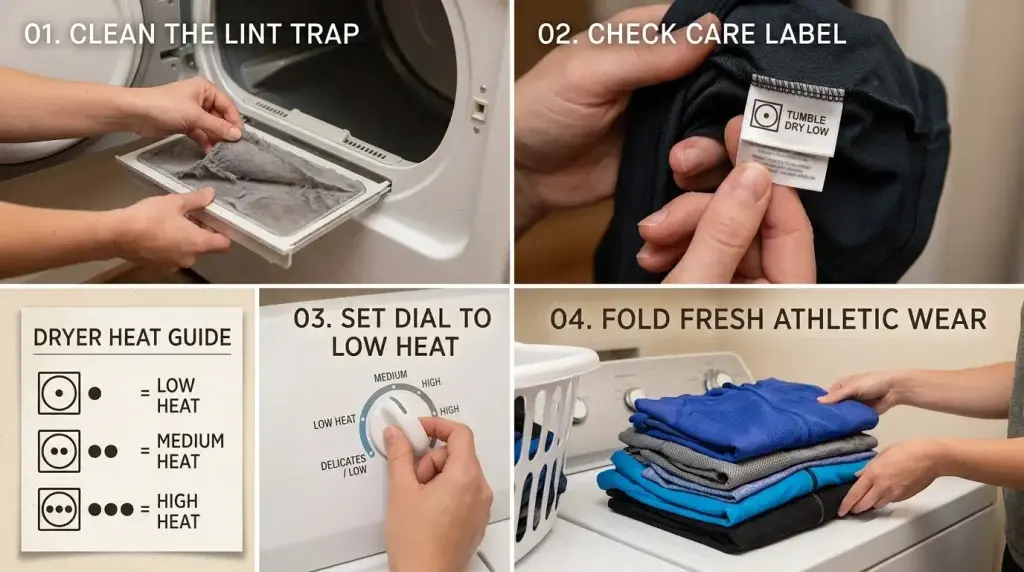
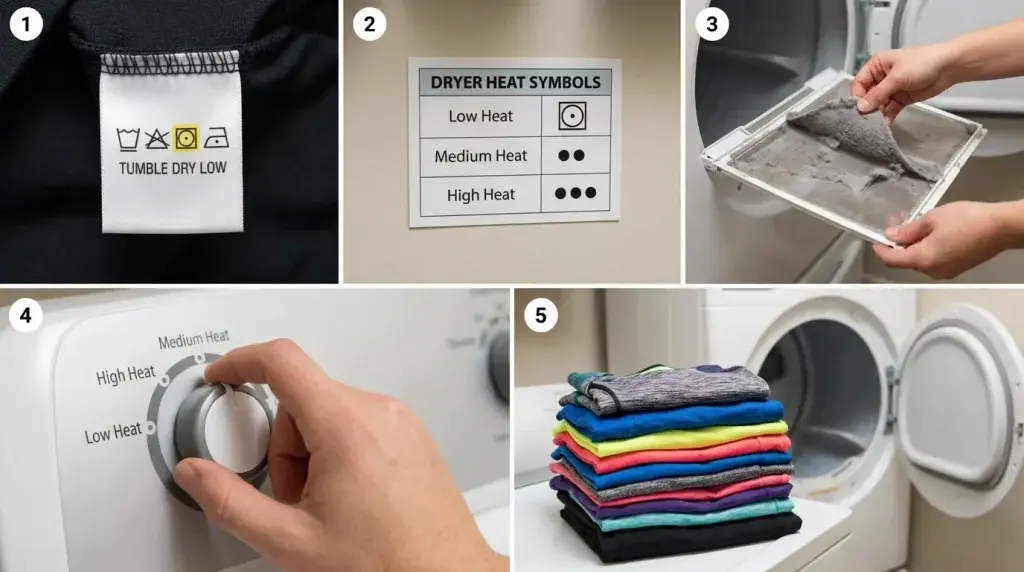
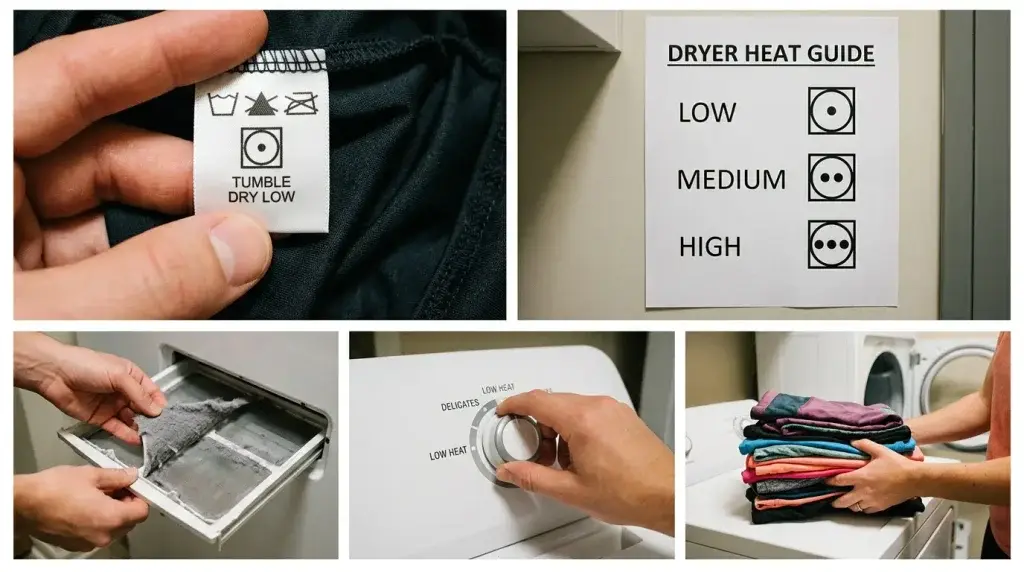
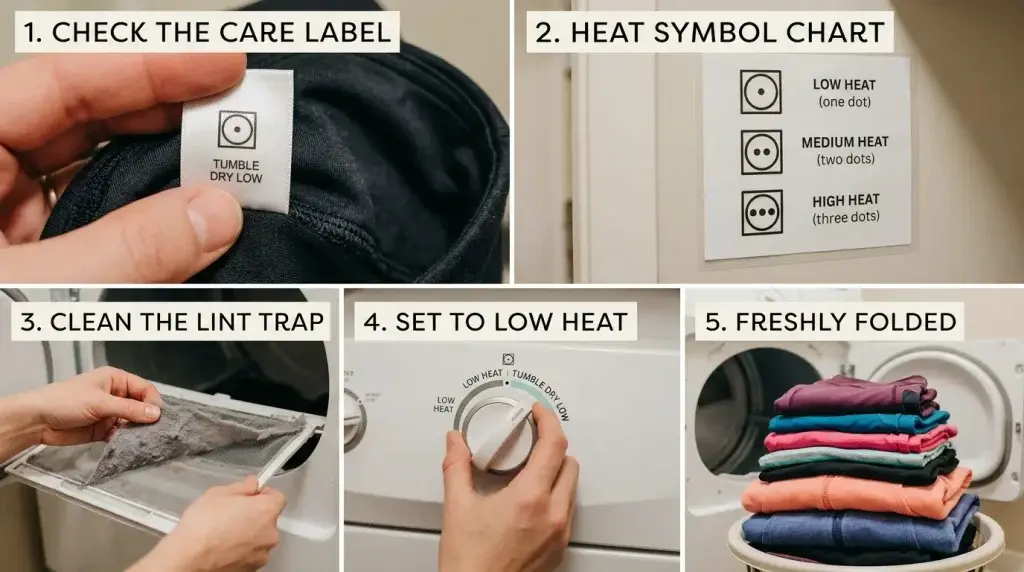
Tumble dry low means to dry the item in a clothes dryer using low heat. On a care label, it usually shows as a square with a circle inside and one dot in the circle. The one dot stands for low heat. If you see two dots, that means medium heat. Three dots mean high heat.
Low heat dries clothes more slowly. It also protects fabric, color, and shape. If you are unsure about a garment, choosing low is almost always the safer path.
What Tumble Dry Low Means on Your Care Label
Care labels use symbols so that people who speak different languages can read them. The dryer symbol is a square with a circle inside it. Think of the square as the dryer box and the circle as the round drum where clothes spin.
Now look for dots inside the circle. These dots show the heat level. One dot means low. That is the tumble dry low symbol. Some tags also add words like “Tumble Dry Low” right next to it, especially on clothes sold in the United States.
You may also see lines under the square. One line means the dryer should use a gentler cycle, often called permanent press. Two lines mean an even softer cycle, often called delicate. So a square with a circle, one dot, and a line below it means “low heat, gentle cycle.”
One more thing is worth knowing. Care labels are not just suggestions. The maker tested the fabric and picked the safest way to clean it. When the tag says low, the maker is telling you what keeps the item looking good the longest.
Tumble Dry Low Symbol vs. Other Dryer Symbols
Dryer symbols are easier once you see them side by side. Here is a simple chart you can come back to.
| Symbol Look | What It Means | When It Is Used |
| Square, circle, one dot | Tumble dry on low heat | Delicate or heat-sensitive items |
| Square, circle, two dots | Tumble dry on medium heat | Everyday clothes like jeans and shirts |
| Square, circle, three dots | Tumble dry on high heat | Sturdy items like towels and cotton sheets |
| Square, circle, filled black center | Tumble dry with no heat (air only) | Very sensitive items |
| Square, circle, big X over it | Do not tumble dry | Items that can shrink or melt |
| Line under the square | Permanent press (gentle) cycle | Wrinkle-prone fabrics |
| Two lines under the square | Delicate cycle | Fragile fabrics |
Notice that the dots work like a heat meter. More dots mean more heat. That makes the low setting easy to spot, since it only has one.
If the tag has a big X over the dryer symbol, skip the dryer completely. Tumble dry low does not mean “low is okay if you are careful.” It simply does not apply when the X is there.
How Hot Is Low Heat in a Dryer?
This is a question many readers have, and the honest answer is: it depends. Under one common international care system, a single dot means the dryer’s exhaust air should stay at about 140°F (60°C) or below. That is a good rule of thumb.
However, dryers in homes do not show exact degrees on the dial. Brands also label their settings differently. One machine may say “Low,” another may say “Delicate,” and a third may say “Air Fluff” for no heat at all. A dryer’s actual heat can also change with age, lint buildup, and how full the drum is.
So treat the setting as a guide, not a perfect measurement. Pick the dryer option called low or the one that is closest to it. If your dryer has a “delicates” setting, that usually runs on low heat too. When in doubt, check your dryer’s manual. It will tell you which setting matches low heat.
Which Fabrics Need Tumble Dry Low
Some fabrics handle heat well. Others do not. Heat can shrink fibers, fade dyes, melt synthetic threads, or make stretchy parts lose their bounce. Here is a quick look at what usually belongs on low.
| Fabric or Item | Why Low Heat Helps | Extra Tip |
| Polyester and nylon | High heat can cause wrinkles or even melt the fibers | Remove promptly to prevent creases |
| Spandex and stretch fabrics | Heat breaks down the elastic | Great for leggings and workout gear |
| Rayon and viscose | These shrink easily | Always follow the tag |
| Dark or bright colors | Heat speeds up fading | Turn clothes inside out first |
| Printed or graphic tees | Heat can crack or peel the print | Dry inside out |
| Knit sweaters (when the tag allows) | Heat can shrink or stretch the shape | Lay flat to finish if damp |
| Bras and activewear | Heat weakens the stretch | Hanging to dry is even safer |
| Baby and kids’ clothes with decorations | Heat can loosen trims and appliqués | Check for loose parts |
Remember, the care label always has the final say. If it says “line dry” or “lay flat to dry,” do that instead. Tumble dry low is only for items that are allowed in the dryer.
How to Tumble Dry Low Step by Step
Using the low setting is simple. Still, a few small habits make a big difference in how your clothes turn out.
First, check the tag. Make sure it shows the dryer symbol with one dot, or the words “tumble dry low.” If the tag has an X over the dryer, do not use the dryer.
Second, shake out the wet items before you put them in. Damp clothes often clump into a tight ball. When you shake them, the air can move around each piece and they dry faster.
Third, clean the lint trap. A full trap blocks airflow. That makes the dryer work harder and take longer, and it is also a fire risk. It only takes a few seconds, so make it a habit.
Fourth, choose the low heat setting. Do not overfill the drum. Clothes need room to tumble. A good guide is to fill the drum about halfway to two thirds full.
Fifth, be patient. Low heat takes more time than medium or high. A load that dries in 40 minutes on medium might need 60 minutes or more on low. That is normal.
Finally, take the clothes out as soon as they are dry, or just before. Letting them sit warm in the drum can set wrinkles. Fold or hang them right away and your clothes will look better with less ironing.
Why Low Heat Protects Your Clothes
You may wonder if all this fuss is worth it. It is, and here is why.
Heat is hard on fabric. Cotton can shrink. Wool can tighten up. Synthetic fibers can get stiff or shiny. Elastic can lose its stretch so that waistbands and cuffs go loose. Heat also weakens the glue and ink in prints. Over many washes, high heat adds up.
Low heat is gentler on every one of these. Your clothes keep their size, color, and softness longer. That means you replace them less often, which saves money.
Low heat has another benefit. It lowers the chance of static cling and harsh wrinkles in many fabrics. Items often come out softer. On top of that, using less heat can use a little less energy per minute, though you may run the dryer longer. So the savings come mostly from clothes that last longer, not from the power bill.
Common Mistakes People Make
Even with a clear tag, some habits can still cause problems.
One big mistake is ignoring the tag and using high heat to save time. This is how many sweaters and workout tops get ruined. Another is overloading the dryer. When it is packed tight, clothes stay damp in the middle, and people then add more heat to fix it. That does the opposite of what the tag asked for.
Some people also forget to clean the lint trap. This slows drying and can lead them to raise the heat. Others dry items that should not go in the dryer at all, like items with an X on the tag.
A few people mix heavy and light items in one load. Towels and thin tops dry at different speeds. The thin tops end up over-dried while waiting for the towels. It is better to group clothes by weight and fabric.
Lastly, many people think “low” means “no heat.” It does not. Low heat is still warm. If you want no heat at all, look for the symbol with the filled black circle, or an “air fluff” setting.
Real Life Examples
Let us look at how this works in everyday life.
Imagine you bought a black polyester athletic shirt. The tag shows a square, a circle, and one dot. You wash it and put it in the dryer on low. It comes out soft, dark, and the right size. If you had used high heat, the shirt might have faded and picked up a stiff feel.
Now think about a pair of yoga leggings with spandex. The tag says “tumble dry low.” You follow it, and the leggings keep their stretch for months. Someone who dries them on high may notice sagging after only a few washes.
Here is another one. A kid’s graphic tee has a bright cartoon print. The tag says low. You turn it inside out and dry it on low. The picture stays smooth. On high, the print could crack or peel.
Finally, picture a mix of thin blouses and a few towels. If you dry them all together on low, the towels might stay damp. So you split the load: towels go on medium (their tag allows it), and blouses go on low. Smart sorting makes each item happy.
Tumble Dry Low vs. Air Drying
Sometimes people ask if it is better to skip the dryer altogether. The answer depends on the tag.
If the care label says tumble dry low, the dryer is safe when used on the low setting. Air drying is also usually fine and even gentler, but it takes longer, and some fabrics can feel stiff afterward. If the tag says line dry or lay flat, follow that instead.
For very delicate items, such as fine knits, lace, and bras, hanging or laying flat is the safest choice even when the tag allows low heat. That is because tumbling can stretch and snag them.
A helpful trick is to start in the dryer on low for ten or fifteen minutes, then hang the item to finish. This takes out wrinkles and cuts the drying time. The item is just damp enough to avoid shrinking from heat, but not so wet that it takes all day to dry.
Tips and Best Practices
A few small habits help you get the best results from your dryer.
Sort by fabric weight and color, not just by color. This keeps each piece from over-drying. Use a few wool dryer balls to help clothes separate and dry faster. They also cut down on static and can soften fabric naturally.
Always check your dryer’s lint trap before each load, and clean the vent hose now and then. Clean airflow means better drying and fewer hot spots.
If you are not sure about a garment and the tag is missing or faded, choose low heat or air dry. It is easier to dry something a bit longer than to fix a shrunken item. Also keep a note on how your own dryer behaves. If it runs hot even on low, shorten the cycle and check the clothes early.
Finally, take a moment to read tags when you buy new clothes. Knowing the care needs ahead of time can help you pick items that fit your laundry routine.
FAQs
What does tumble dry low mean on a clothing tag?
It means you can dry the item in a dryer, but only on the low heat setting. The symbol is a square with a circle and one dot inside.
Is tumble dry low the same as delicate?
Not exactly. Low describes the heat level, while delicate describes the cycle, which is about how gently the drum moves. Many dryers pair them, but they are two different settings.
Can I use medium heat instead of low?
It is best not to. The maker picked low for a reason, such as protecting stretch, color, or shape. Using higher heat can cause shrinking or damage.
How long does tumble dry low take?
It usually takes longer than higher heat, often 50 to 80 minutes for an average load. The time depends on your dryer, how full it is, and the fabric.
Does tumble dry low prevent shrinking?
It lowers the risk, but it does not remove it. Some fabrics can still shrink if washed in hot water or if they are not made to resist shrinking. Always follow the full care label.
What if my dryer has no low setting?
Look for settings like delicates, gentle, or air fluff. Check your dryer manual to learn which option uses the least heat. If none fit, air dry the item instead.
Conclusion
The tumble dry low meaning is simple: use the dryer’s low heat setting, shown by a square, a circle, and one dot. It protects stretchy, colorful, and delicate items from the damage that high heat can cause.
Remember that low heat is warm, not cold, and it takes more time. Clean the lint trap, avoid overloading, sort your laundry well, and take clothes out promptly. When you are unsure, choose low heat or air dry.
Next time you pull a shirt out of the washer, take five seconds to read the tag. That small habit can keep your favorite clothes looking great for years.

Hi, I’m Sarah Mitchell. I love writing faith-based content that brings peace, hope, and encouragement to everyday life. Through prayers and devotionals, my goal is to help readers feel closer to God and stronger in faith.