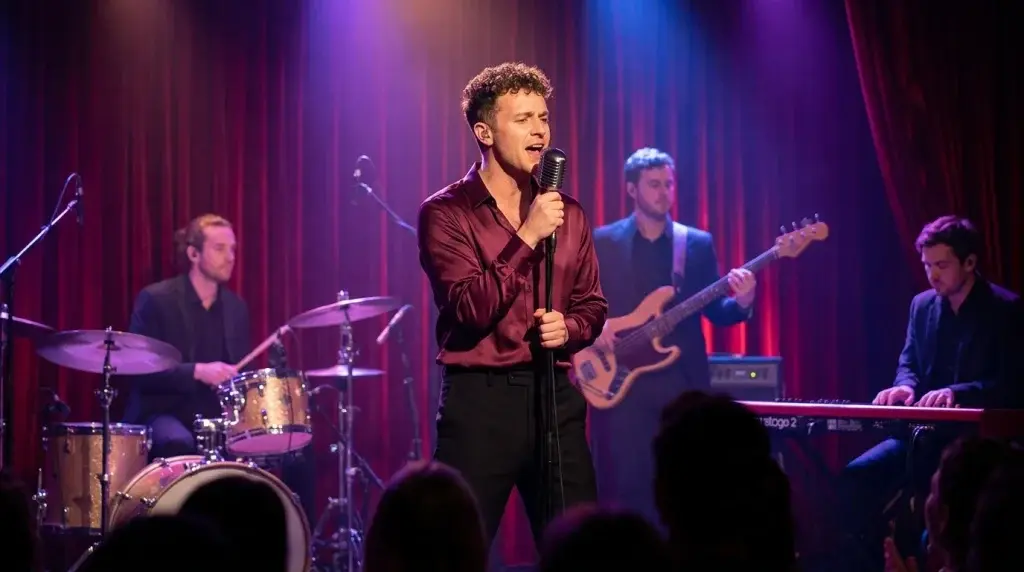
R&B stands for “rhythm and blues.” It is a style of popular music that mixes smooth vocals, strong rhythms, and deep feelings. The term started in the United States in the late 1940s. Today, R&B meaning goes far beyond that first label, and it covers many sounds, from classic soul to modern chart hits.
You may have seen “R&B” on a playlist, a radio station, or an award show and wondered what it really means. Maybe you heard someone say it and felt unsure.
That is a fair question, because the word has changed a lot over the years. In this guide, you will learn what R&B stands for, where it came from, how it sounds, and how to write it the right way.
Quick Answer: R&B Meaning in One Minute
R&B means “rhythm and blues.” The “rhythm” part points to the beat that makes you nod your head or tap your foot. The “blues” part points to the emotional style that grew out of the blues, a music form created by African American communities in the American South.
Most people use the term in two ways. In history books, R&B means the music of the 1940s and 1950s that led to rock and roll. In everyday talk today, R&B means modern songs about love, life, and heartbreak, sung with smooth, soulful voices over groovy beats.
Both meanings are correct. The word simply grew with the music.
What R&B Means in Music
Let’s break the name into two parts. “Rhythm” is the pattern of beats in a song. It is the part that makes music feel alive. “Blues” is a style of music that came from the hard times and strong spirit of Black Americans. Blues songs often tell honest stories about pain, hope, work, and love.
When you put them together, you get a sound that moves your body and touches your heart at the same time. That mix is what R&B has always done best.
R&B is also about the voice. Singers often bend notes, hold long phrases, and add small vocal runs. This gives the song a warm, personal feeling, as if the singer is talking right to you.
Another key idea is emotion. R&B songs often cover love, desire, loss, joy, and healing. A fast R&B song might make you want to dance. A slow one might make you think about someone you miss. Either way, the feeling comes first.
It also helps to know that R&B is not one fixed sound. It is more like a big family of styles that share a few common traits. That is why people sometimes disagree about what counts as “real” R&B.
Where the Term R&B Came From
Before the name “rhythm and blues” existed, the music industry used a different label. In the 1940s, records made by Black artists for Black listeners were often called “race records.” That name was unfair and hurtful, and it separated the music from the rest of the market.
A music writer named Jerry Wexler is often credited with helping change that. He worked at Billboard magazine in the late 1940s. He suggested a fresher name, and “rhythm and blues” soon took hold. In 1949, Billboard began using the new term for its chart that tracked music by Black artists, replacing the old “race records” label.
The music itself was older than the name. R&B grew from several roots that blended together in American cities. Blues gave it the emotional core. Jazz gave it fancy horn lines and a love of improvising. Gospel gave it powerful, church-trained singing. Boogie-woogie piano and swing bands added lively, driving beats.
Great cities helped it spread. Places like Chicago, Detroit, Memphis, New Orleans, and Los Angeles all had busy music scenes. Small record labels sprang up, and radio stations began playing the new sound. Early stars like Louis Jordan, Ruth Brown, and Ray Charles helped bring R&B to bigger crowds.
Over time, the chart name changed several times, and so did the word’s use. Still, “R&B” stuck around, and it is the label most people use today. The history of the name tells a bigger story, too. It shows how Black artists shaped American music, often before getting fair credit.
How R&B Sounds
If you have never listened closely to R&B, it helps to know what to listen for. The table below shows the main parts of the sound and what each one adds.
| Part of the Sound | What It Means | How It Feels |
| Vocals | Smooth, soulful singing with runs and long notes | Warm and personal |
| Rhythm | A steady groove, often with a strong backbeat | Makes you move |
| Harmony | Layers of voices singing together | Rich and full |
| Lyrics | Stories about love, life, and feelings | Honest and relatable |
| Instruments | Bass, keys, guitar, drums, and sometimes horns or synths | Smooth and groovy |
The bass line is a big part of the magic. In many R&B songs, the bass is deep and round, and it holds the groove together. The drums often stay relaxed, so the song feels laid back even when the beat is strong.
Modern R&B uses more electronic tools, such as drum machines and synthesizers. Older R&B leaned on live bands with horns and pianos. The tools changed, but the goal stayed the same: to make music that feels good and says something real.
The Main Eras of R&B
R&B has changed a lot across the decades. Here is a simple map of its biggest chapters. Keep in mind that the dates are rough, because styles often overlap.
| Era | Rough Time | What It Sounded Like | Example Artists |
| Early R&B | 1940s–1950s | Bluesy, bouncy, horn-driven | Louis Jordan, Ruth Brown, Ray Charles |
| Soul | 1960s–1970s | Gospel-style power and passion | Aretha Franklin, Marvin Gaye, Stevie Wonder |
| Contemporary R&B | 1980s onward | Polished, smooth, pop-friendly | Whitney Houston, Janet Jackson |
| New Jack Swing | Late 1980s–early 1990s | R&B singing over hip-hop beats | Bobby Brown, Guy |
| Hip-Hop Soul | 1990s | Raw feelings with street-smart edge | Mary J. Blige, Aaliyah |
| Neo-Soul | Late 1990s–2000s | Earthy, artistic, jazz-tinged | D’Angelo, Erykah Badu, Lauryn Hill |
| Alternative R&B | 2010s onward | Moody, experimental, electronic | Frank Ocean, The Weeknd, SZA |
Each era grew from the one before it. Soul took the gospel energy of early R&B and turned it up. Contemporary R&B made the sound shinier and gave it a bigger place on pop radio. Hip-hop then changed everything again, bringing new beats and fresh attitudes.
Many experts also note that the word “R&B” can mean different things depending on the era. A music fan in 1955 and a music fan today may picture very different songs. Both are right, because the term has always moved with the times.
R&B vs. Rock and Roll, Soul, and Hip-Hop
People often mix up R&B with nearby styles. Let’s clear that up.
R&B and rock and roll are close cousins. In the early 1950s, rock and roll grew out of R&B, blues, and country music. Many early rock hits were first made, or heavily inspired, by R&B artists. The main difference today is the sound. Rock leans on loud electric guitars, while R&B leans on smooth vocals and groovy rhythms.
Soul is a branch of R&B. It brought in heavy gospel influences and emphasized raw, passionate singing. Some people use “soul” and “R&B” almost as if they mean the same thing. Others say soul is one chapter inside the bigger R&B story. Both views make sense.
Hip-hop is a different art form, with rapping at its center. Even so, R&B and hip-hop have been close partners since the late 1980s. Many songs mix a sung chorus with a rapped verse. Because of this blend, it can be hard to tell where one style ends and the other begins.
Pop is the biggest overlap of all. Many R&B stars make pop-friendly songs, and many pop stars borrow from R&B. If a song has smooth vocals, a groove, and a love story, there is a good chance R&B is part of its DNA.
Famous R&B Artists You Should Know
If you want to explore R&B, it helps to meet some of the artists who shaped it. This list is not complete, but it is a strong place to start.
From the early days, Ray Charles stands out. He blended gospel, blues, and jazz in a way that felt brand new. Etta James and Ruth Brown brought powerful voices and bold personalities. Sam Cooke helped build the bridge between gospel and popular music.
In the soul era, Aretha Franklin earned the nickname “Queen of Soul.” Marvin Gaye made music that was both smooth and deeply thoughtful. Stevie Wonder, a gifted singer and instrument player, wrote songs that mixed joy with big ideas.
Later stars helped R&B rule the pop charts. Whitney Houston’s voice became one of the most famous in the world. Janet Jackson, Prince, and Michael Jackson also helped shape the sound of the 1980s. In the 1990s and 2000s, artists like Mary J. Blige, Usher, Alicia Keys, Beyoncé, Brandy, and Aaliyah carried R&B into a new age.
More recent voices include SZA, Frank Ocean, H.E.R., Summer Walker, and Brent Faiyaz. Each one adds a personal twist, which shows that R&B is still growing.
British vs. American English: Does R&B Mean the Same Thing?
For the most part, yes. People in both the United States and the United Kingdom use “R&B” to mean rhythm and blues. The spelling of the abbreviation is the same, so there is no spelling gap to worry about.
There is one fun difference in history. In 1960s Britain, “R&B” often described young British bands that played hard-driving, blues-based music. Groups like The Rolling Stones, The Animals, and The Yardbirds were first described this way. They loved American blues and R&B records and played their own versions.
Today, “R&B” in both countries mostly points to the smooth, soulful style described in this article. The UK also has a strong modern R&B scene, with its own artists and flavors.
Common Mistakes When Writing and Using R&B
A few small errors show up a lot, so here is how to avoid them.
First, the correct way to write it is “R&B,” with capital letters and an ampersand in the middle. You will also see “R and B” or “R ‘n’ B” in some casual writing, and those are understandable. Still, “R&B” is the standard form in most news stories, music charts, and magazines.
Second, avoid writing “RnB” in formal writing. People do use it online, especially in social posts or hashtags, but it is not the preferred form. If you are writing an essay, a blog post, or a school paper, stick with “R&B.”
Third, remember that “R&B” is not the same as “blues.” Blues is the older style that helped create R&B. R&B added stronger beats, bigger bands, and a more polished feel.
Fourth, don’t assume R&B only means old music. Some people picture only classic records from the 1950s or 1960s. In truth, R&B is alive and well today, and new artists keep adding to it.
Finally, try not to treat R&B as a single sound. Calling a slow, soft song and a loud, electronic song the same thing may feel odd. But both can fall under R&B, because the label covers a wide range.
Real Life Examples of R&B in Use
Seeing the word in action can make the meaning clearer. Here are a few everyday ways people use it.
Someone might say, “I’m making an R&B playlist for the road trip.” That means a collection of smooth, soulful songs, probably from several decades. A radio host might say, “Next up, the best R&B from the nineties,” which points to artists like Aaliyah, Toni Braxton, and Boyz II Men.
At award shows, “Best R&B Album” is a standard category. This shows that the industry sees R&B as a major genre with its own stars and style. On streaming apps, you will find R&B sections filled with both old favorites and new releases.
A friend might say, “I’m in an R&B mood tonight.” That usually means they want something mellow, romantic, or deeply felt. And a teacher in a music class might say, “Rock and roll grew out of R&B,” which is a history lesson about where modern music began.
In each case, the word means “rhythm and blues,” but the picture in the listener’s mind can change. That is part of what makes the term so interesting.
Current Usage and Trends in R&B
R&B today is more open and mixed than ever before. Streaming has made it easy to hear songs from any era, so younger listeners often find classic soul and modern R&B side by side.
One big trend is blending. Many new R&B songs mix in elements of hip-hop, pop, electronic music, and even Afrobeats from West Africa. Artists feel free to cross lines and make something personal. This can make it hard to put a song in one box, but that freedom is part of the fun.
Another trend is honesty. Many modern R&B artists write openly about mental health, self-love, relationships, and everyday struggles. The lyrics feel like diary pages set to music. Listeners connect with that truth, and it keeps the genre feeling fresh.
Production has also changed. Home studios and digital tools let artists create full songs on a laptop. Some tracks sound warm and old school, while others sound spacey and futuristic.
Meanwhile, throwback sounds keep returning. Many fans love the smooth grooves of the 1990s and early 2000s, and some new artists proudly bring that style back. Whether the sound is old or new, the heart of R&B stays the same.
Tips for Exploring R&B as a New Listener
If you are new to R&B, don’t worry about doing it “right.” Just follow what feels good. Still, a few tips can help.
Start with what you already like. If you enjoy pop, try artists such as Beyoncé, Rihanna, or Alicia Keys. If you like hip-hop, try Mary J. Blige or Usher. You can then branch out in either direction, forward to newer artists or backward to older ones.
Next, explore by era. Spend a week with 1960s soul, then a week with 1990s R&B, then a week with current hits. You will begin to hear how the sound grows and changes.
Pay attention to the voices. Notice how singers hold notes, add runs, or sing softly and then burst out. Those small choices are a big part of what makes R&B special.
Read the lyrics, too. Many R&B songs tell clear, relatable stories. Knowing the words can make the music hit harder.
Finally, look up the history when something grabs you. Learning who wrote a song, who influenced a singer, or how a style began can make listening richer. R&B has a deep past, and every great song connects to it in some way.
FAQs About R&B Meaning
What does R&B stand for?
R&B stands for “rhythm and blues.” It is a music style that began in African American communities in the 1940s and blends soulful singing with strong beats.
Is R&B the same as soul music?
They are closely related but not always identical. Soul is a branch of R&B that grew in the 1960s with strong gospel influence. Many people treat soul as one chapter in the bigger R&B story.
Who invented the term R&B?
Music writer Jerry Wexler is often credited with helping create the term while working at Billboard in the late 1940s. The magazine began using it in 1949 in place of the older “race records” label.
What is the difference between R&B and hip-hop?
R&B focuses on singing, while hip-hop centers on rapping. The two styles often mix, though, and many songs include both a sung chorus and rapped verses.
Is it okay to write R&B as “RnB”?
“RnB” is common online and in casual posts, but “R&B” is the standard form in formal writing. If you are unsure, use “R&B.”
Is R&B still popular today?
Yes. R&B remains a major genre worldwide. New artists keep mixing it with pop, hip-hop, and electronic sounds, and classic R&B is still loved by listeners of all ages.
Conclusion
R&B meaning comes down to two simple words: rhythm and blues. Behind those words is a long, rich story that began in the 1940s and keeps growing today. The name came from a need for a fairer, fresher label, and the music itself came from the blues, jazz, and gospel that Black artists shaped into something new.
Along the way, R&B gave birth to soul, helped create rock and roll, and joined forces with hip-hop and pop. It has been smooth, bold, gentle, and daring, sometimes all in one song.
If you want to understand R&B, the best step is to listen. Start with one song you love, then follow the thread to the artists who inspired it. Write it as “R&B” when you use it, and remember that the label covers a wide, welcoming world of sound.

Hi, I’m Rebecca Hayes. I write faith-filled articles, healing prayers, and daily devotionals to encourage people in every season of life. My passion is helping readers find peace, hope, and strength through prayer.