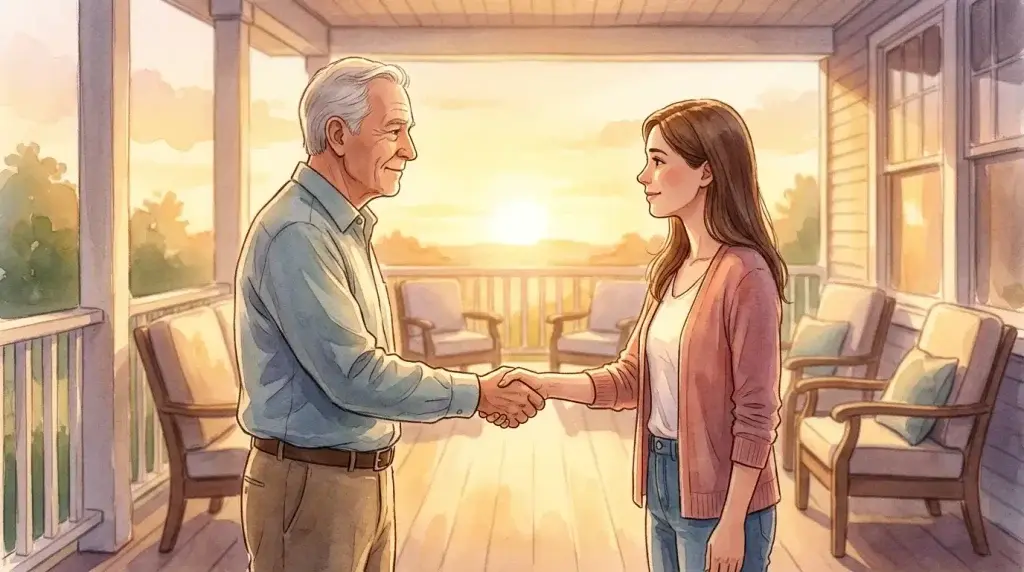
“Turn the other cheek” means to answer an insult or an attack with calm instead of revenge. It comes from the Bible, and today people use it to describe letting go of anger, refusing to hit back, and choosing peace over payback.
Have you ever been insulted and wanted to say something mean in return? Most of us have. Then someone told you to “just turn the other cheek,” and you wondered what that really meant. Does it mean you must let people walk all over you? Does it mean you can never stand up for yourself? Those are fair questions, and many people search for the answer every day. In this article, you will learn the turn the other cheek meaning in plain words. You will see where the saying came from, how to use it in a sentence, what it does not mean, and how people use it in daily life. By the end, you will know exactly when to use this phrase and how to understand it the right way.
Quick Answer
To turn the other cheek is to refuse to take revenge when someone treats you badly. Instead of fighting back, you stay calm, respond with kindness, or simply walk away. It is an idiom, which means the words do not mean exactly what they say. Nobody is literally turning a face. The phrase describes a choice to rise above an insult, an injury, or an unfair act.
Here is a quick look at the key facts.
| Question | Short Answer |
| What does it mean? | To not seek revenge after being wronged |
| Where does it come from? | The Sermon on the Mount in the Bible |
| Is it literal? | No, it is an idiom |
| What is the opposite? | An eye for an eye |
| Does it mean being weak? | No, many see it as a sign of strength |
The Meaning in Simple Words
Think of the saying as a pause button. Someone says something cruel or does something unfair. Your first urge is to strike back. Turning the other cheek means you press pause on that urge and choose a better path.
That better path can look different in different cases. What matters is that you do not let anger run the show.
The idiom is about self-control. It is about breaking a cycle. When one person yells and the other yells back, the fight only grows. When one person stays calm, the fight often runs out of fuel.
It also helps to know that the phrase is a verb phrase. You can “turn the other cheek,” “turned the other cheek,” or be “turning the other cheek.” The words change with the tense, but the meaning stays the same.
Where the Phrase Comes From
The saying comes from the teachings of Jesus in the New Testament of the Christian Bible. It appears in the Sermon on the Mount, in the Gospel of Matthew, chapter 5, and a similar teaching shows up in the Gospel of Luke, chapter 6. In the Matthew passage, Jesus tells his listeners not to resist an evil person, and says that if someone strikes you on the right cheek, you should turn your other cheek to them as well.
Just before this teaching, Jesus mentioned an older rule: “an eye for an eye, and a tooth for a tooth.” That rule was meant to keep punishment fair. A person could not take more than they had lost. Jesus then offered a different path. Instead of matching harm with harm, he asked people to break the chain.
Some Bible scholars also point out a detail about the slap. In that time and place, a strike on the right cheek was usually delivered with the back of the right hand. That kind of slap was often meant to insult or shame a person, not to cause serious injury. So turning the other cheek may have been a quiet way of refusing to be shamed. Scholars do not all agree on this reading, so it is best to treat it as one respected view and not as settled fact.
Why People Still Use It Today
You do not need to be religious to use this phrase. It has become a part of everyday American English. People use it at work, at home, in sports, in politics, and online.
Part of the reason is that the idea fits modern life. We live in a world where arguments can explode in seconds, especially on social media. Anyone can post a nasty comment, and anyone can reply with something worse. The idea of stopping that chain feels useful.
Many leaders have also pointed to this teaching as a guide for peaceful action. Mahatma Gandhi said the Sermon on the Mount had a deep effect on his thinking about nonviolence. Martin Luther King Jr. also taught nonviolent resistance, and he drew on Christian teaching along with other sources. These leaders did not see peaceful response as weakness. They saw it as a powerful way to face injustice.
How to Use “Turn the Other Cheek” in a Sentence
Using an idiom correctly is easier when you see it in action. Here are some real-life examples.
| Situation | Example Sentence |
| At work | “My boss blamed me for his mistake, but I decided to turn the other cheek and keep working.” |
| In school | “When the other team taunted us, our coach told us to turn the other cheek.” |
| In a family | “She said something rude at dinner, and Dad just turned the other cheek.” |
| Online | “He turned the other cheek and did not answer the angry comments.” |
| In the past tense | “After the argument, she turned the other cheek and invited him to lunch.” |
Notice that the phrase usually follows a moment of conflict. Someone does something unkind, and the main person chooses not to fight back. You can use it for small things, like a rude comment, or for bigger things, like a serious betrayal.
You can also use it in a negative way: “I’m not going to turn the other cheek this time.” That sentence means the speaker plans to respond, speak up, or take action.
What It Does Not Mean
This is where many people get confused. Some think turning the other cheek means you must accept abuse forever. That is not what the saying is about, and a careful reading shows why.
First, it does not mean you should stay in danger. If someone is hurting you, you have every right to get safe, ask for help, and report the harm. Walking away from an abuser is not a failure to turn the other cheek. Safety comes first.
Second, it does not mean you cannot speak up. Calm words are not the same as revenge.
Third, it does not mean you must pretend you are not hurt. Feelings are real. You can feel sad or angry and still choose not to strike back. The saying is about what you do, not about what you feel.
Fourth, it does not mean that wrongdoing should go unanswered in the justice system. Many people read the teaching as a guide for personal revenge, not as a rule that bans courts, laws, or fair consequences. Religious thinkers have debated this for centuries, and views differ, so it is wise to avoid claiming there is only one correct reading.
Common Mistakes People Make
A few mix-ups come up again and again. Knowing them can help you use the phrase with confidence.
One common mistake is writing “turn the other check.” The correct word is “cheek,” like the side of your face. A “check” is something else, like a bank check or a checkmark.
Another mistake is thinking the phrase means “to ignore something.” Ignoring a problem is not the same as choosing peace. Turning the other cheek is an active choice. You see the wrong, and you decide not to repay it with more wrong.
A third mistake is using the phrase for any kind of forgiving. Forgiveness is a close cousin, but it is not identical. You can turn the other cheek in the moment and still need time before you truly forgive.
Finally, some people use the phrase to pressure others. Telling a hurt person to “just turn the other cheek” can feel unkind, especially if they are being treated badly. The phrase is best used as personal advice or a personal choice, not as a way to silence someone.
Similar Sayings and Opposites
English has many sayings that sit near this one. Comparing them can make the meaning clearer.
| Phrase | Meaning | Relation |
| Take the high road | Act with honor even when others do not | Very similar |
| Let it go | Stop dwelling on a wrong | Similar |
| Bury the hatchet | End a fight and make peace | Similar |
| Kill them with kindness | Answer rudeness with extra niceness | Similar |
| An eye for an eye | Repay harm with equal harm | Opposite |
| Tit for tat | Return each action in kind | Opposite |
| Fight fire with fire | Meet aggression with aggression | Opposite |
These phrases show that English speakers value both sides of the story. Some moments call for fairness and firmness. Others call for peace and patience. The wise part is knowing which is which.
Real-Life Ways to Turn the Other Cheek
Ideas are easier to use when you can picture them. Here are a few everyday ways the saying can show up.
Imagine a driver cuts you off in traffic. You could honk and shout, or you could take a breath and let the car go. Letting it go keeps your day from being ruined.
Picture a coworker who takes credit for your idea. You may feel furious. Turning the other cheek here might mean you stay professional, then speak to your manager calmly with facts. You do not trade insults, but you also do not stay silent about a real problem.
Think about a sibling who says something hurtful during an argument. A day later, you reach out with a kind message instead of waiting for them to apologize first. That small step can repair a lot.
Consider a young student who is teased on the playground. Turning the other cheek could mean walking away, finding a friend, and telling a teacher. That is a smart and brave response, not a weak one.
In each case, the person keeps control of their own actions. That is the heart of the saying.
Is Turning the Other Cheek a Sign of Strength?
Many people think it takes more strength to stay calm than to lash out. Anger is quick and easy. Patience is harder. When you refuse to be pulled into a fight, you show that someone else’s bad behavior does not control you.
Psychologists also note that holding onto anger can be hard on the mind and body. Letting go of grudges is linked with lower stress for many people. That does not mean you must forgive everyone right away, but it does suggest that peace can be good for you, not only for the other person.
Still, strength also means knowing your limits. A strong person can say no. A strong person can walk away, ask for help, or draw a firm line. Turning the other cheek works best when it comes from confidence and not from fear.
Tips for Using the Idea in Daily Life
If you like the idea behind this saying, here are some practical habits that can help.
Take a breath before you answer. Even five seconds can keep you from saying something you will regret. Ask yourself if your reply will make things better or worse.
Choose your battles. Not every insult deserves a response. Some things are small and can simply be let go.
Stay safe. If a situation feels dangerous, leave and get help. Peace never requires you to put yourself at risk.
Speak up calmly when needed. You can state a boundary without raising your voice. Something like, “Please do not speak to me that way,” is clear and firm.
Give yourself time. Forgiveness often comes in steps. You can choose not to hit back today and still be working on forgiveness next month.
FAQs
What is the simple meaning of “turn the other cheek”?
It means to stay calm and not take revenge when someone hurts or insults you. You choose peace instead of payback.
Where does “turn the other cheek” come from?
It comes from the Bible, in the Sermon on the Mount found in the Gospel of Matthew, with a similar teaching in the Gospel of Luke.
Does turning the other cheek mean you should let people abuse you?
No. It does not mean you must stay in harm’s way. You can leave, ask for help, and set limits while still refusing to seek revenge.
What is the opposite of turning the other cheek?
The closest opposite is “an eye for an eye,” which means repaying harm with the same harm. “Tit for tat” is another opposite.
Is “turn the other cheek” an idiom?
Yes. An idiom is a phrase whose meaning is different from its exact words. No one is truly turning their face. The phrase stands for a calm, forgiving response.
Can you use this phrase if you are not religious?
Yes. Millions of people use it in daily speech without any religious meaning. It has become a common way to describe choosing peace over revenge.
Conclusion
The turn the other cheek meaning is simple at its core. It is about answering unkindness without revenge. The phrase began in the teachings of Jesus, but it now belongs to everyday English, where it stands for patience, self-control, and peace.
Remember that this idea does not ask you to be weak. You can stay safe, speak up calmly, and still refuse to hit back. Many people find that this kind of response protects their own peace of mind as much as it helps the other person.
Next time someone says or does something unfair, pause for a moment. Ask yourself what response will help most. Sometimes the best answer is a calm word, a deep breath, or simply walking away. That small choice is often what turning the other cheek really looks like.

Hi, I’m Elias Monroe. I enjoy writing meaningful prayer content that helps people feel calm, hopeful, and spiritually strong. My goal is to share words that bring comfort during both joyful and difficult times.