
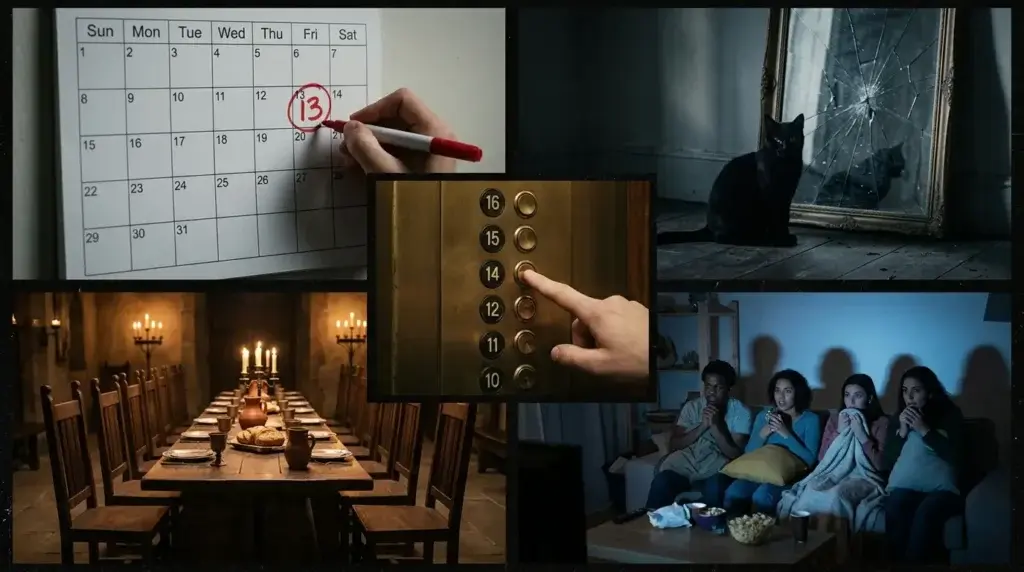
Friday the 13th meaning is simple: it is a day many people believe brings bad luck. It happens whenever the 13th day of a month lands on a Friday. Some people feel nervous, cancel plans, or skip travel. Others just enjoy the spooky fun.
So why do so many people search for this topic? Maybe a calendar caught their eye. Maybe a scary movie night is coming up. Or maybe a friend joked, “Be careful today!” In this guide, you will learn what the day means and where the superstition may have started.
Quick Answer
Friday the 13th is a day that many people see as unlucky. The idea blends two old beliefs: that the number 13 is unfortunate, and that Friday is a risky day. When the two meet, the fear gets stronger. There is no proof that anything bad is more likely to happen on this day. It is a superstition, not a fact. Still, it has lasted for hundreds of years, and it remains one of the best-known folk beliefs in the United States.
Friday the 13th Meaning and Definition
On the surface, the meaning is plain. It is a date. Any month with a 13th that falls on a Friday has a Friday the 13th.
The deeper meaning is about belief. A superstition is an idea that something causes luck or bad luck, even when there is no real link. Friday the 13th is a classic example. People say it brings accidents, broken plans, money trouble, or just a strange feeling that “something will go wrong.”
Meaning also changes from person to person. For some, it is a serious worry. For others, it is a fun reason to watch horror movies or to wear a lucky charm. Some people even see it as a good-luck day. Stores sell themed shirts, restaurants run “unlucky” specials, and tattoo shops offer cheap designs. So the same date can mean fear, fun, or just another Friday.
Why Are the Number 13 and Friday Both Seen as Unlucky?
The day gets its power from two separate fears that joined together. Let us look at each one.
The number 13. People have long treated 12 as a “complete” number. There are 12 months in a year, 12 hours on a clock face, and 12 signs of the zodiac. Then comes 13, which breaks the pattern. It feels like the odd one out. That may be one reason it earned a bad name.
Many buildings in the United States skip the 13th floor in their numbering. The elevator goes from 12 to 14. Some hotels and hospitals also leave out room 13. Airlines in some countries have been known to skip row 13. These choices are not about science. They are about keeping guests and customers comfortable.
The day Friday. Friday has carried a heavy mood in some Christian traditions because many believers link it to the crucifixion of Jesus. In the past, some sailors would not start a trip on a Friday. They believed it would doom the voyage.
When you mix an unlucky number with an unlucky day, you get a double dose of worry. That is likely why the pairing sticks in our minds.
Where Did the Friday the 13th Superstition Come From?
Here is the honest answer: nobody knows for sure. There is no single clear starting point. Many historians believe the idea built up slowly over time. Still, several stories come up again and again.
The Last Supper. In Christian tradition, 13 people sat at the table for the Last Supper: Jesus and his 12 apostles. Judas, who later betrayed Jesus, is often described as the 13th guest. This story helped link the number 13 with betrayal and sorrow.
A Norse myth. Another tale comes from old Norse stories. Twelve gods were having a feast when Loki, a trickster god, arrived uninvited as the 13th guest. Trouble followed, and a beloved god named Baldr was killed.
The Knights Templar. On Friday, October 13, 1307, King Philip IV of France ordered the arrest of many members of the Knights Templar, a powerful religious and military group. This event is real, and the date really was a Friday the 13th. Many writers point to it as a starting point. Yet historians point out that the fear of the date seems to appear much later, so the link may be a story added afterward.
Early writing. One of the earliest known written mentions of the fear in the modern sense is from the 1800s. A biography of the composer Gioachino Rossini says he died on a Friday the 13th in 1868 and that he had long feared the day. In 1907, an American novel called Friday, the Thirteenth by Thomas W. Lawson told of a stock broker who used the unlucky date to cause a market panic. The book is thought to have helped spread the idea in the United States.
So the real picture is a mix of religion, folklore, and storytelling. No single piece explains it all.
Popular Stories That Are Not Proven
Because the topic is so old and so spooky, some false claims spread widely. It helps to sort fact from fiction.
You may read that the ancient Code of Hammurabi skipped the 13th law. That claim is often repeated online, but the code does not skip a law number in that way. The text was written long before the modern idea of “unlucky 13” took shape. So this one is a myth.
Nobody can confirm numbers like that. Be careful with any article that gives exact scary totals without a clear source.
Another common claim says the fear began on a single date in ancient times and has gone unchanged ever since. History does not support this. Beliefs changed from place to place and from century to century.
When you read about this topic, ask a simple question: “Where did this fact come from?” A good source will name a book, a study, or an expert. If it does not, take it lightly.
Fear Names: Two Long Words You Can Impress Friends With
Some people have a real fear of the number 13 or the date. Doctors and researchers use special names for these fears. Here is a quick table to make them easy to remember.
| Term | What It Means | Easy Way to Remember |
| Triskaidekaphobia | Fear of the number 13 | “Tris-kai-deka” comes from Greek words for “three and ten” |
| Paraskevidekatriaphobia | Fear of Friday the 13th | “Paraskevi” is the Greek word for Friday, with “dekatria” meaning “thirteen” |
| Friggatriskaidekaphobia | Another name for fear of Friday the 13th | Named after Frigg, a Norse goddess linked to Friday |
These words are long, and most people never need to say them. But they show that the fear is taken seriously enough to have a name. Experts say that for most people, the worry is mild. For a small number, though, it can cause real stress. Some may avoid driving, flying, or going to work. A person who feels this way may want to talk with a doctor or counselor, as with any strong fear.
How Often Does Friday the 13th Happen?
It happens more often than many people think. Every year has at least one Friday the 13th. Some years have as many as three. That is because of how our calendar is built. The calendar repeats in a long pattern, and over that pattern the 13th lands on a Friday slightly more often than on any other weekday.
Here is a look at some upcoming dates, based on the standard calendar.
| Year | Friday the 13th Dates | How Many |
| 2026 | February 13, March 13, November 13 | 3 |
| 2027 | August 13 | 1 |
| 2028 | October 13 | 1 |
In 2026, the next one is coming up on November 13. If you like to plan ahead, you can check any calendar to find the others in future years.
Unlucky Days Around the World
Not every country fears Friday the 13th. Some have their own unlucky days or numbers. This shows that superstitions are shaped by local culture, not by nature.
| Place | Unlucky Day or Number | Short Note |
| United States and United Kingdom | Friday the 13th | The most famous version in English-speaking countries |
| Italy | Number 17, and sometimes Friday the 17th | In Roman numerals, XVII can be rearranged to spell VIXI, which means “I have lived,” a phrase linked to death |
| Spain and Greece | Tuesday the 13th | Tuesday is tied to Mars, the god of war |
| China, Japan, and Korea | Number 4 | In these languages, the word for four sounds like the word for death |
The Italian story about VIXI is a popular explanation, but experts say it is hard to prove. As with many folk beliefs, the reasons are partly history and partly guesswork.
Does Science Say Friday the 13th Is Really Unlucky?
The short answer is no. There is no strong proof that this date causes more bad events. But researchers have looked at the question, and the results are interesting.
A well-known study was published in the British Medical Journal in 1993. It looked at traffic and hospital data in one area of England. The authors reported more hospital visits from car accidents on a Friday the 13th than on a Friday the 6th. They suggested that stress and fear might change how people act. Other experts said the study was small and could not prove the date itself was to blame.
Other research has found the opposite. For example, a report from a Dutch insurance center in 2008 found that fewer accidents and thefts were reported on Friday the 13th than on other Fridays. Many experts think that people who fear the day may simply drive more carefully or stay home.
So the science is mixed. Nothing shows that the day is truly dangerous. What we do know is that a strong belief can change how we feel and act. If you expect a bad day, you may notice every little problem and blame the date. This is called confirmation bias. It means we remember what fits our beliefs and forget what does not.
You may also have heard that businesses lose money on this day. Some groups have shared large estimates of lost sales and missed work. Those numbers are often repeated, but they are hard to check, so they are best treated as rough guesses.
How Friday the 13th Shows Up in Daily Life
The day appears in more places than you might expect. Here are a few examples you may have seen yourself.
Buildings and travel. As mentioned, many tall buildings skip the 13th floor. A hotel might number the floors 12, 14, and 15 while the real 13th floor still exists. Some people avoid booking flights on this date, though many travel deals show up because of low demand.
Movies and pop culture. The film Friday the 13th came out in 1980 and started a long horror series. Its masked character, Jason Voorhees, became one of the best-known figures in scary movies. Because of this, many Americans now link the date with fiction and fright as much as with old superstitions. Horror fans often plan movie marathons for the day.
Business and sales. Some stores use the day as a fun theme. You might see “unlucky” discounts, black-cat sales, or spooky menus. Tattoo shops are famous for offering small designs at lower prices on this date.
Personal habits. Many people have small rituals. They might knock on wood, carry a lucky coin, avoid walking under ladders, or skip a big decision until the next day. These habits are usually harmless, and they can even bring comfort.
Common Mistakes People Make About Friday the 13th
A few wrong ideas come up again and again. Clearing them up can help you read about this topic with more confidence.
The first mistake is thinking the superstition is thousands of years old. In truth, the modern form of the fear is much newer. Parts of it, like the unlucky number 13, are older. But the exact “Friday the 13th” idea seems to grow strongly in the 1800s and 1900s.
The second mistake is believing it is a worldwide fear. It is not. As the table showed, other countries have different unlucky days.
The third mistake is treating one story as the full answer. People often say, “It all began with the Knights Templar” or “It all came from the Last Supper.” In reality, many pieces probably blended over time.
The fourth mistake is mixing up the two fears. Fear of 13 is not exactly the same as fear of Friday the 13th. One is about a number, and the other is about a date.
The last mistake is trusting scary statistics with no source. If a number sounds too exact and too shocking, check where it came from.
Tips for Getting Through Friday the 13th
If the day makes you uneasy, you are not alone. Here are some simple ways to handle it.
Start by remembering that this is a normal Friday with a spooky name. Your plans, your job, and your safety do not change because of a date. If you feel nervous, take a few slow breaths and focus on what is right in front of you.
Next, keep your routine. You do not need to cancel a trip or skip an important meeting. If you have a big choice to make, think about if waiting a day would truly help. If it would not, go ahead.
You can also turn the day into something fun. Watch a classic scary movie with friends. Bake black-cat cookies with your kids. Try a “lucky 13” challenge, such as doing 13 small acts of kindness. Making the day silly takes away its power.
If you do worry a lot, write down your fears and look at them calmly. Often they seem smaller on paper. And if the fear is strong enough to disturb your sleep or daily life, speaking with a doctor or counselor is a smart step.
Finally, stay careful as you would on any day. Drive safely, watch your step, and take care of your health. Good habits beat good luck every time.
FAQs
1. What is the meaning of Friday the 13th?
It means any Friday that falls on the 13th day of a month. Many people see it as an unlucky day. The belief comes from old fears about the number 13 and the day Friday. There is no proof that the date itself causes bad luck.
2. Why is Friday the 13th considered unlucky?
Nobody knows the exact reason. Most experts think several old ideas joined together over time. These include the story of the Last Supper, folk tales about the number 13, and old beliefs that Friday was a risky day for travel and new starts.
3. How many Friday the 13ths can happen in one year?
Every year has at least one and at most three. For example, 2026 has three: February 13, March 13, and November 13. The pattern comes from how the calendar repeats.
4. Is Friday the 13th unlucky in every country?
No. In Spain and Greece, people often fear Tuesday the 13th instead. In Italy, the number 17 is seen as unlucky. In parts of East Asia, the number 4 is the one people avoid. Beliefs change from place to place.
5. What is the fear of Friday the 13th called?
It is called paraskevidekatriaphobia. Some people also use the name friggatriskaidekaphobia. The fear of the number 13 alone is called triskaidekaphobia. These are long words, but they simply describe a fear of the date or number.
6. Is it safe to travel or make big plans on Friday the 13th?
Yes. Studies have not shown that the date is truly more dangerous. Some travel deals are even cheaper because fewer people book. Use the same care you would on any other day, and plan as you normally would.
Conclusion
The Friday the 13th meaning comes down to this: it is a date wrapped in old stories, mixed fears, and plenty of pop culture. The number 13 and the day Friday each carried a gloomy mood long before they met on the calendar. Together, they grew into one of the best-known superstitions in America.
Yet the facts are calm. History offers many tales but no single proven starting point. Science has found no clear sign that the day is more dangerous. What really changes is how we feel and act when we believe in bad luck.
So here is a good plan for the next Friday the 13th. Go about your day, stay careful, and treat it as a chance to have a little fun. Knowing the meaning behind a superstition takes away much of its spell.

Hi, I’m Elias Monroe. I enjoy writing meaningful prayer content that helps people feel calm, hopeful, and spiritually strong. My goal is to share words that bring comfort during both joyful and difficult times.





1 thought on “Friday the 13th Meaning: Why This Day Feels Unlucky<p class="post-updated-date">🕓 <span class="updated-label">Last updated on</span> <time datetime="2026-10-22T00:15:57+00:00">October 22, 2026</time></p><script type="application/ld+json"> { "@context": "https://schema.org", "@type": "BlogPosting", "mainEntityOfPage": { "@type": "WebPage", "@id": "https://prayyeralert.com/friday-the-13th-meaning/" }, "datePublished": "2026-10-22T00:15:56+00:00", "dateModified": "2026-10-22T00:15:57+00:00" } </script>”