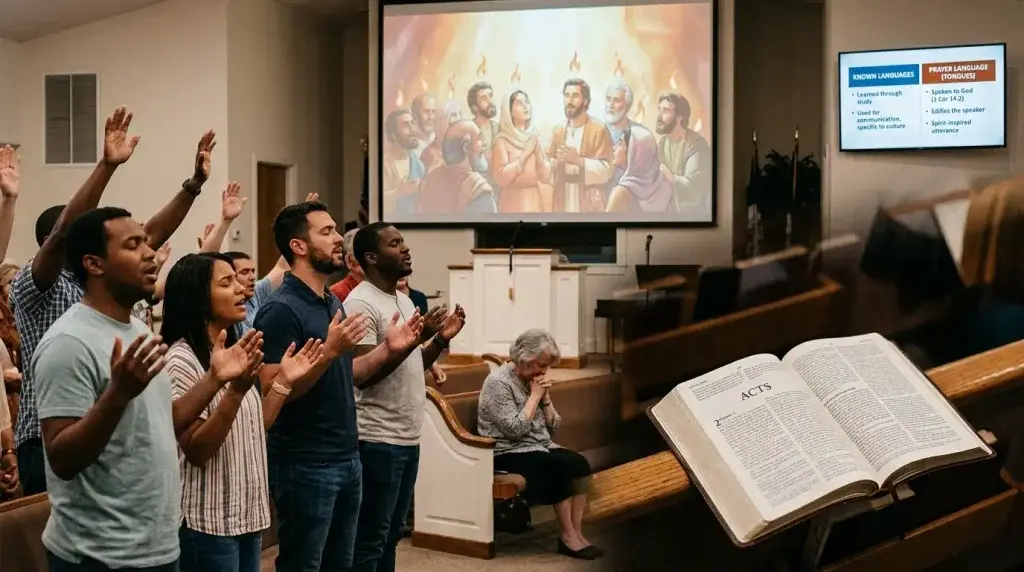
The speaking in tongues meaning is simple. It is when a person speaks in sounds or words they have not learned, usually while praying or worshiping. Many believers say the Holy Spirit gives them these words. Some people hear it as a strange new language. Others hear it as a flow of sounds with no clear words.
You may have heard it in a church video, a movie, or a Bible verse. Maybe you were just curious. That is why so many people search for this topic. In this article, you will learn what speaking in tongues is, where it comes from, how churches see it, and what scientists have found. We will keep it clear, fair, and easy to follow.
Quick Answer: Speaking in Tongues Meaning in Simple Words
Speaking in tongues is a spiritual practice in which a person speaks sounds that sound like language but are not a language they learned. Christians who practice it believe it is a gift from God. It is also called glossolalia, a word built from two Greek words meaning “tongue” and “to speak.”
In the Bible, the word “tongues” often just means “languages.” That is one reason people get confused. Sometimes the Bible talks about people speaking real human languages. Other times it seems to describe a prayer language that no one understands without help. Both ideas are part of the story, and we will look at each one.
What Does Speaking in Tongues Sound Like?
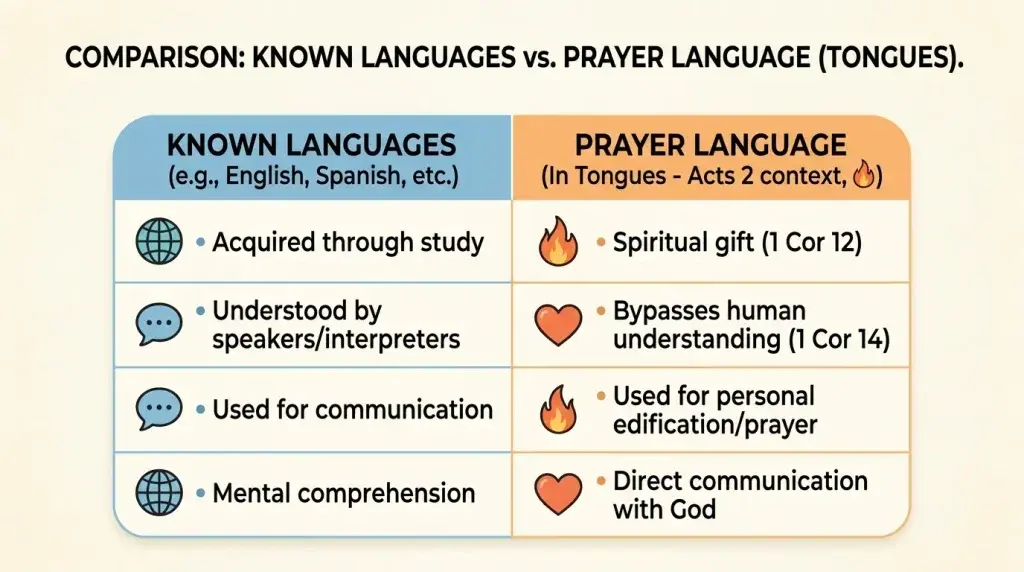
If you have never heard it, it can be hard to picture. Most of the time, it sounds like a fast, steady flow of syllables. The sounds may rise and fall like a song. They may repeat. A person may speak softly, or they may speak with a loud, strong voice.
The person is usually calm and in control. They often keep their eyes closed. Some raise their hands. Others kneel or sit quietly. In many churches, a whole group may do this at the same time, and the room fills with a low hum of voices.
Here is what surprises many first-time listeners. It does not always sound wild or scary. In many places, it looks more like quiet prayer than a loud show. Of course, practices differ from church to church, and from person to person.
Where Speaking in Tongues Comes From in the Bible
Most of what people know about this topic comes from the Bible. The New Testament mentions tongues in several places. Here are the most important ones.
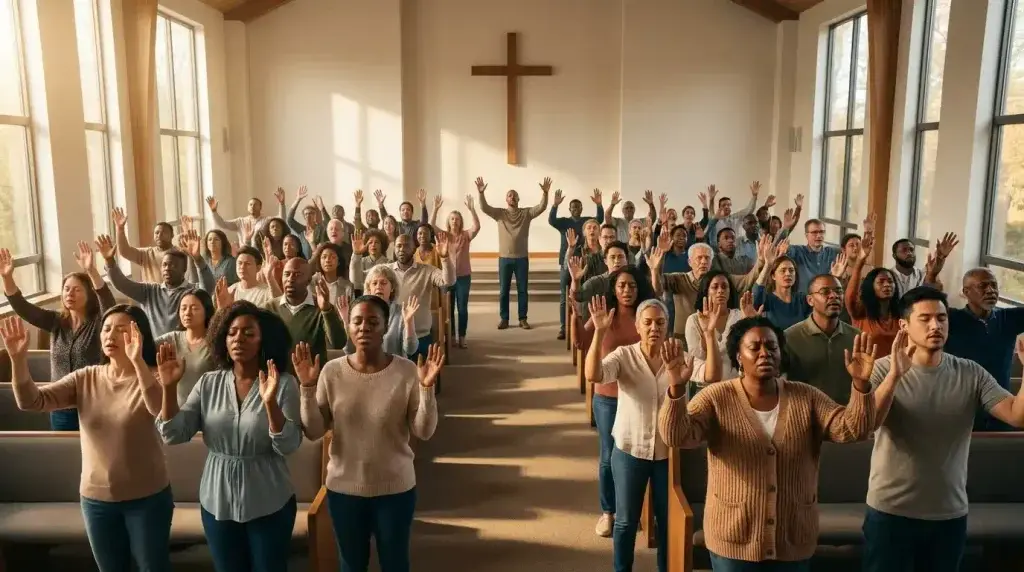
The first is the day of Pentecost, in the book of Acts, chapter 2. The followers of Jesus were gathered together. The story says the Holy Spirit came upon them, and they began to speak in other languages. Crowds from many nations were nearby. Each person heard the message in their own home language. This is the best-known example, and it seems to involve real, known human languages.
The second is in Acts 10 and Acts 19. In these stories, new believers received the Spirit and spoke in tongues. These events helped early Christians see that the Spirit was for many kinds of people.
The third is the letters of Paul, especially 1 Corinthians chapters 12 through 14. Here Paul writes to a church in Corinth.
Finally, Mark 16:17 lists speaking in new tongues as a sign that would follow believers. Many scholars note that this verse is in an ending of Mark that some early manuscripts do not include. So people read and use it in different ways.
Two Main Kinds of Tongues People Talk About
When people study the Bible, they often sort tongues into two main kinds. The table below shows the difference in plain words.
| Feature | Known Languages (Pentecost Style) | Prayer Language (Corinthians Style) |
| What it is | Speaking a real human language you never learned | Speaking sounds that no human listener understands |
| Main Bible example | Acts 2 | 1 Corinthians 14 |
| Who understands it | People who know that language | No one, unless someone is given the meaning |
| Main purpose | Sharing a message with others | Praying to God, often in private |
| Needs an interpreter? | Not always | Yes, if used in a group meeting |
Not every Christian agrees on how these two fit together. Some say they are the same gift in different settings. Others say they are different gifts. This is one reason the topic can lead to long and friendly, or sometimes heated, talks.
Why Do Christians Speak in Tongues?
People who practice it give a few common reasons. Understanding these helps you see why it matters to them.
One reason is prayer. Many believers say they sometimes run out of words when they pray. They may feel joy, grief, or worry too big to explain. Tongues, they say, lets the heart pray when the mind has no words. They often point to Paul’s words that the Spirit can pray for us in ways we cannot put into speech.
Another reason is worship. Some people feel that tongues lets them praise God in a deeper way. It feels more like a song from the heart than a spoken sentence.
A third reason is comfort and closeness. Many describe a sense of peace, warmth, or nearness to God. They say it helps them feel stronger in hard times.
A fourth reason is that they see it as a sign of the Spirit. In some churches, speaking in tongues is taught as proof of being “baptized in the Holy Spirit.” Other churches do not teach this at all. We will cover that next.
How Different Churches See Speaking in Tongues
Christians do not all agree about tongues. Some groups welcome it. Others say it ended long ago. Others simply do not focus on it. Here is a quick look.
| Group | General View | Common Practice |
| Pentecostal churches | Tongues are active today and often a key sign of the Spirit | Common in worship services and private prayer |
| Charismatic groups | Tongues are a real gift, but not required for everyone | Found in many denominations, including some Catholic and Protestant churches |
| Catholic Charismatic Renewal | Tongues are accepted as one of the Spirit’s gifts | Practiced in prayer groups, not in every parish |
| Orthodox and many mainline churches | Rarely emphasized, though not always rejected | Uncommon in regular worship |
| Cessationist churches | Miraculous gifts like tongues ended in the early church era | Not practiced, and often taught against |
Because of this, the same word can mean different things in different places. A person raised in a Pentecostal church might see it as normal. A person raised in a cessationist church may see it as strange or even wrong. Neither group is a single block, so you will find a range of views inside each one.
A Short History of Speaking in Tongues
Tongues are described in the New Testament, but how often they happened in later centuries is debated. Some writers in the early church mention spiritual gifts. After that, the practice appears less often in the records, though some groups through history reported it.
The big change came in the early 1900s. In 1901, a Bible school in Topeka, Kansas, led by Charles Parham, reported students speaking in tongues. A few years later, in 1906, a revival in Los Angeles at Azusa Street, led by William Seymour, drew large crowds. This event is often seen as a starting point for the modern Pentecostal movement. From there, the practice spread across the world.
In the 1960s, tongues began showing up in churches that were not Pentecostal. This was called the charismatic movement. In 1967, a group of Catholics connected to Duquesne University in Pittsburgh began a renewal that carried charismatic prayer into the Catholic Church. Today, Pentecostal and charismatic Christians number in the hundreds of millions worldwide, according to major religion researchers. This makes tongues one of the most visible parts of modern Christianity in many countries.
What Do Scientists and Linguists Say?
Researchers have studied this practice for decades. Their findings are interesting, and it is fair to share them in a calm way.
Linguists, who study language, have looked at recordings of tongues. One well-known researcher, William Samarin, studied many samples in the 1960s and 1970s. He found that the sounds did not have the structure of a true language, such as a steady set of words and grammar rules. He described them as language-like, but not an actual language. Many other linguists have reached similar views.
Brain scientists have also taken a look. A small study led by Andrew Newberg at the University of Pennsylvania, published in 2006, scanned people while they spoke in tongues. The scans showed less activity in parts of the brain linked to self-control and planning. This matches what believers often say, that they feel they are not forcing the words. Still, it was a small study, and scientists warn against reading too much into it.
Here is the key point. Science can measure sounds and brain activity. It cannot prove or disprove If God is involved. People of faith often say the study of how it works does not change what it means to them. People who doubt it often say the research shows it is a learned or trance-like behavior. Both sides can read the same facts and draw different conclusions.
Common Mistakes and Myths About Speaking in Tongues
A lot of confusion comes from small mix-ups. Here are some of the most common.
Mistake one: thinking it is always a real foreign language. Sometimes people report that a listener understood tongues as their own language, as in Acts 2. But most modern tongues are not claimed to be human languages. Many believers describe it as a prayer language.
Mistake two: thinking everyone in every church does it. Many Christians never speak in tongues, and many churches do not teach it. Even in churches that welcome it, not every member does it.
Mistake three: thinking it means someone is out of control or unwell. In most cases, people stay aware and can stop whenever they choose. Quiet tongues in prayer are common.
Mistake four: mixing it up with other things. Speaking in tongues is not the same as “speaking in code,” talking nonsense on purpose, or a mental illness. Some other traditions have similar kinds of speech during rituals. But the meaning in each case is different, so it is best not to lump them together.
Mistake five: forgetting the Bible’s own warning for order. In 1 Corinthians 14, Paul asks for order, clear meaning, and love. Many churches that practice tongues still follow this idea. They ask for an interpreter or keep it for private prayer.
Real Life Examples of Speaking in Tongues
Examples can make this idea easier to see. Here are a few simple ones.
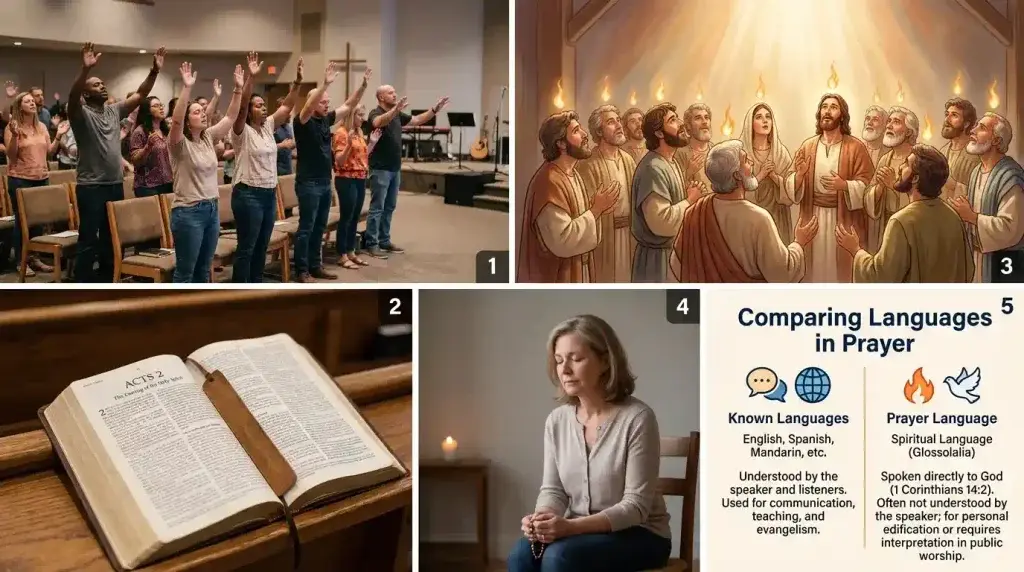
Imagine a woman in a small church who is praying after a hard week. She starts with normal words. Then her words slow down. She switches to soft, flowing sounds she has never studied. She says it feels like her heart is praying even when her mind is tired.
Picture a worship service with a hundred people. After a song, a few people begin to speak in tongues while others sing quietly. A leader then stops and asks if anyone has a message to explain. One person gives a short meaning in English. This follows the order Paul described.
Now think of a teenager at a youth camp. A friend told him about tongues. He feels nervous. A pastor tells him not to force anything and not to feel ashamed. He prays quietly. Some people in this story say they spoke in tongues. Others say they did not and were still welcome. In healthy churches, either outcome is respected.
Finally, think of a missionary who tells a story of a stranger who understood a prayer in the stranger’s own language. These stories are told in many churches. They cannot be checked in the same way as lab studies, so people weigh them differently. It is fair to say that they matter deeply to those who share them.
Tips for Understanding This Topic with Respect
If you are curious, you can learn more without taking a side right away. Here is some practical advice.
Start by reading the main Bible passages yourself: Acts 2 and 1 Corinthians 12 through 14. Read them slowly, and notice what each one actually says.
Next, listen to more than one view. Read what a Pentecostal pastor says. Then read what a scholar from a cessationist church says. You will learn more by hearing both.
Talk to real people. If you know someone who speaks in tongues, ask them kindly what it means to them. Most are glad to share. Avoid mocking or arguing, since this is a deep part of faith for many.
Be careful with videos online. Some are staged, edited, or made to shock viewers. A calm talk with a real person often gives a clearer picture than a clip.
If you feel pressure from any group to speak in tongues, you do not have to give in. Healthy faith communities do not shame people for not having this practice.
FAQs About Speaking in Tongues
What is the simple meaning of speaking in tongues?
It means speaking in sounds or languages you did not learn, usually during prayer or worship. Believers say it is a gift from the Holy Spirit. The word for it is glossolalia.
Is speaking in tongues in the Bible?
Yes. It appears in Acts 2, Acts 10, Acts 19, and in Paul’s letters in 1 Corinthians 12 through 14. Mark 16:17 also mentions it, though that passage is debated by scholars because of questions about the manuscripts.
Is speaking in tongues a real language?
Most linguists who have studied modern tongues say it does not have the grammar and word structure of a true language. Some believers say it is a spiritual language, not a human one. And some people share stories of others understanding them in a known language. These stories are hard to test.
Do all Christians speak in tongues?
No. Many Christians never do, and many churches do not teach it. It is most common in Pentecostal and charismatic groups.
Is speaking in tongues dangerous?
For most people, it is a calm and safe practice. Problems can come from pressure, shame, or fake shows. If a person feels confused, upset, or afraid, it is wise to talk with a trusted pastor, friend, or doctor.
Why do some churches say tongues ended?
Churches that hold this view are called cessationist. They believe miraculous gifts, like tongues, were mainly for the early church era and stopped after the first apostles. Other Christians disagree and believe these gifts continue today.
Conclusion
Now you know the speaking in tongues meaning and why it stirs so many questions. At its heart, it is a spiritual practice in which a person speaks in sounds or words they did not learn, often during prayer or worship. The Bible describes it in Acts and in Paul’s letters, and churches today hold very different views about it. Some welcome it, some limit it, and some say it has ended.
Science adds useful details, but it cannot settle the faith question. That part is left to each person’s beliefs and experience.
Here is a final piece of advice. Keep an open mind and a kind heart. Read the Bible passages for yourself, listen to different voices, and ask honest questions. If you agree or not, understanding what others believe is a good step toward respect.

Hi, I’m Rebecca Hayes. I write faith-filled articles, healing prayers, and daily devotionals to encourage people in every season of life. My passion is helping readers find peace, hope, and strength through prayer.