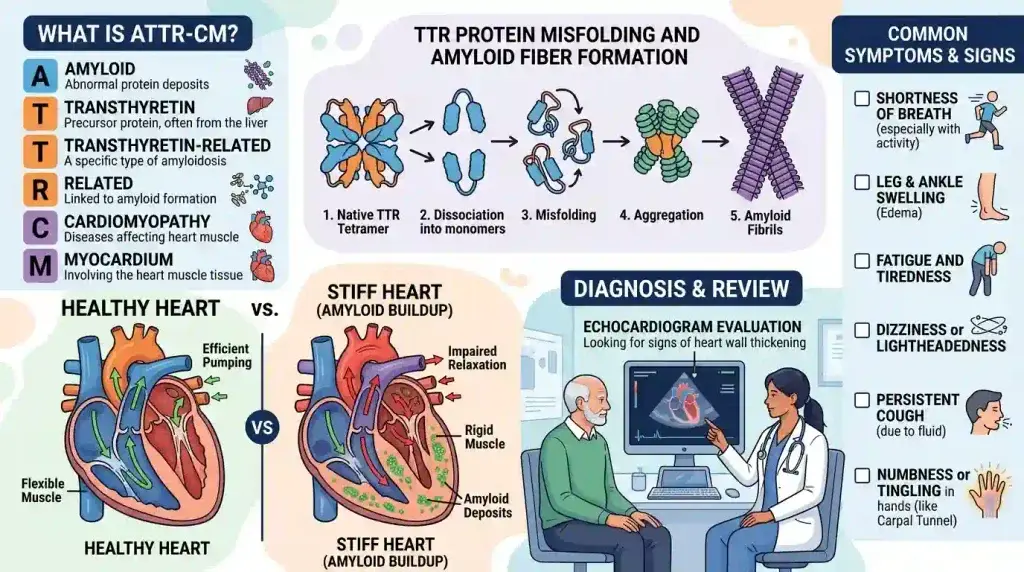
ATTR-CM stands for transthyretin amyloid cardiomyopathy. It is a heart disease. A protein called transthyretin folds the wrong way, clumps into sticky fibers called amyloid, and builds up in the heart. The heart walls get stiff and cannot fill with blood well. That is the ATTR-CM meaning in plain words.
Maybe you saw these letters on a test result, in a news story, or in a doctor’s note. Many people have never heard of this condition, and for years even doctors missed it. This guide explains the ATTR-CM meaning step by step. You will learn what each letter stands for, what causes the disease, which signs to watch for, how doctors test for it, and which treatments exist today. Everything is written in simple words so it is easy to follow.
Quick Answer: ATTR-CM Meaning in Simple Words
ATTR-CM is a condition where a protein called transthyretin (say it like “trans-THY-reh-tin”) becomes unstable. It breaks apart and forms amyloid, which is a type of sticky, waxy deposit. The deposits collect in the muscle of the heart, mostly in the left side.
Think of a soft, stretchy balloon. Now imagine filling it with wet sand until it turns stiff. A stiff balloon cannot stretch to hold air. A heart full of amyloid works the same way. It cannot stretch to hold enough blood, so less blood moves out to the body.
Over time, this can lead to heart failure. The good news is that doctors now have ways to find ATTR-CM and treatments that can slow it down. Catching it early makes a big difference.
Breaking Down the Letters
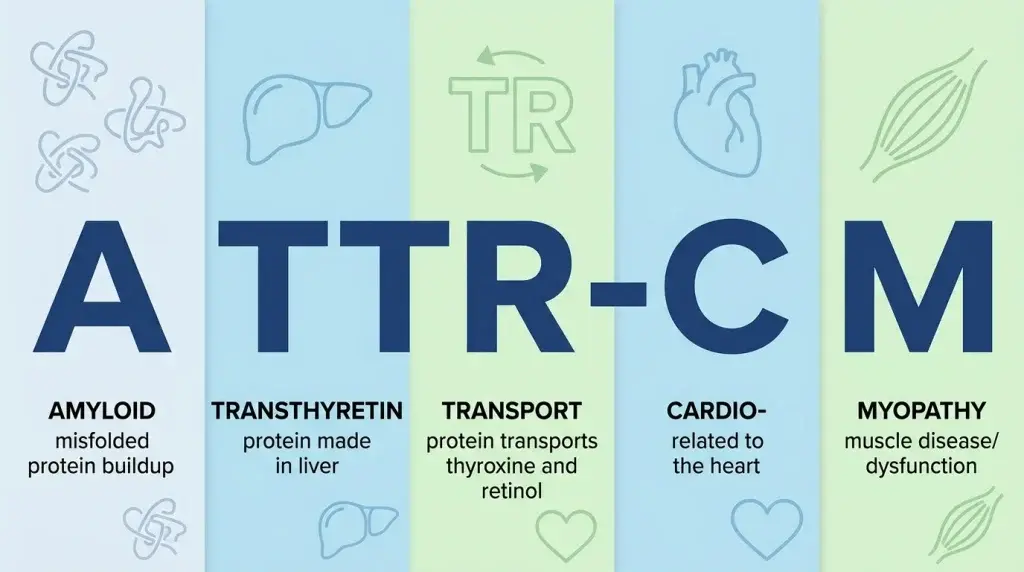
Each part of the name tells you something. Once you know the pieces, the long name feels much less scary.
| Letters | Full Word | What It Means |
| A | Amyloid | Sticky protein clumps that build up in organs |
| TTR | Transthyretin | The name of the protein that goes wrong |
| CM | Cardiomyopathy | A disease of the heart muscle |
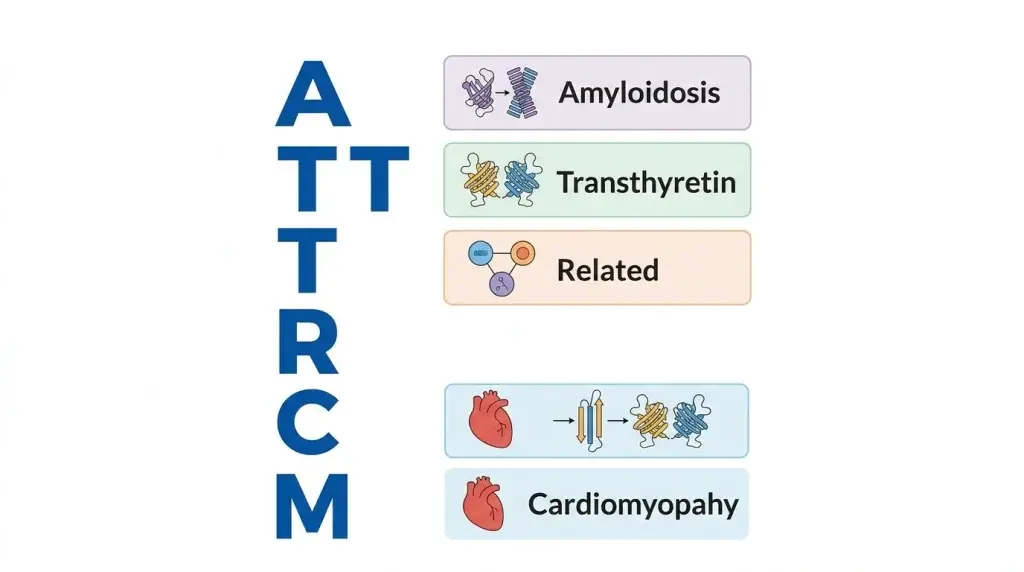
So when you put it together, ATTR-CM means “a heart muscle disease caused by transthyretin amyloid.” Some doctors write the full name. Others use the short form to save time.
You may also see ATTR on its own. ATTR is the bigger family of diseases. It can affect the heart, the nerves, or both. ATTR-CM points to the heart. Another form, often written ATTR-PN, points to the nerves. The “PN” stands for polyneuropathy.
What Is Transthyretin and Why Does It Go Wrong?
Transthyretin is a protein your body makes every day, mostly in the liver. It is not a bad protein. In fact, it has a job. It helps carry a thyroid hormone called thyroxine and a form of vitamin A through your blood.
Normally, transthyretin forms a neat group of four pieces. Doctors call this group a tetramer. Think of four Lego bricks snapped together tightly. As long as they stay snapped together, all is well.
In ATTR-CM, those four pieces come apart. The loose pieces fold into the wrong shape and stick to each other. They form long, thin fibers. The fibers travel through the blood and settle in tissues, and the heart is a common landing spot.
Why does this happen? There are two main reasons. In some people, aging seems to make the protein less stable. In others, a change in a gene makes the protein weak from the start. We will look at both in the next section.
The Two Main Types of ATTR-CM
Doctors split ATTR-CM into two types. Knowing which one you have matters because it affects family planning and testing.
| Feature | Wild-Type ATTR-CM | Hereditary ATTR-CM |
| Other names | ATTRwt | ATTRv or hATTR |
| Cause | Not linked to a gene change; tied to aging | A gene change passed through families |
| Usual age at start | Often after age 60 or 65 | Can start earlier, depending on the gene change |
| Who is affected most | More common in men | Men and women |
| Family testing | Usually not needed | Often suggested for close relatives |
The word “wild-type” sounds odd. It simply means the gene is the normal, “natural” version. The protein still goes wrong, but not because of an inherited gene change.
Hereditary ATTR-CM comes from a variant, which is a small change in the TTR gene. Many different variants exist. One called V122I (also written Val122Ile) is found in about 3 to 4 percent of Black Americans, according to published research. Other variants are more common in certain parts of the world, such as Portugal, Sweden, Japan, and Ireland.
A child of a person with a hereditary variant has a 50 percent chance of inheriting it. But having the variant does not always mean a person will get sick. Some carriers never develop symptoms. That is why genetic counseling can help families make sense of the results.
Common Signs and Symptoms of ATTR-CM
ATTR-CM often starts quietly. The signs can look like normal aging or like other heart problems. Because of this, many people go years without the right diagnosis.
The most common signs come from the heart not filling or pumping well. People may feel short of breath, especially when climbing stairs or walking uphill. They may feel very tired, even after rest. Swelling in the feet, ankles, or legs is common. Some people notice swelling in the belly.
Heart rhythm problems also show up often. A fast or uneven heartbeat called atrial fibrillation is common in ATTR-CM. Some people feel dizzy or faint, especially when they stand up fast. That happens because the stiff heart cannot adjust blood flow quickly.
Here is a clue that surprises many people. Someone who used to have high blood pressure may find that it drops over time, and they may even stop needing pills. That can happen as the heart weakens. It should not be ignored.
None of these signs prove ATTR-CM. Many conditions cause them. But if you have several of them, or if they are getting worse, it is wise to talk with a doctor.
Clues Outside the Heart
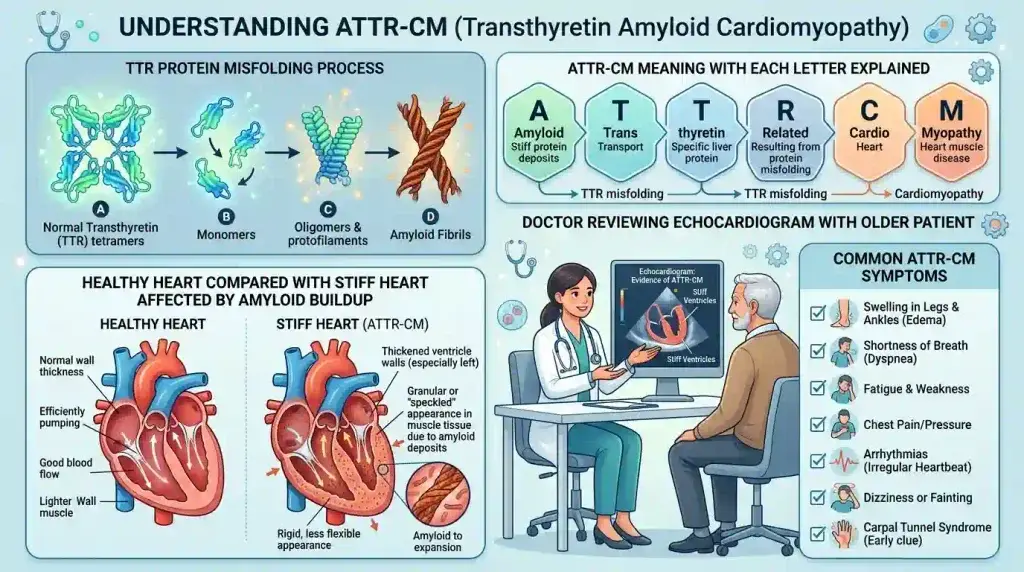
Amyloid does not always stay in the heart. It can settle in other places too, and these spots can give early hints, sometimes years before heart trouble starts.
Carpal tunnel syndrome is one of the best-known hints. It causes numbness, tingling, or pain in the hand and wrist. Many people get carpal tunnel for ordinary reasons. But when it shows up in both hands, in an older adult, it can sometimes be an early sign of amyloid.
Other clues include lower back pain from a narrowed spinal canal, a condition called spinal stenosis. Some people have a torn biceps tendon, the one in the upper arm, after only a small strain. Numbness or burning in the feet and trouble with digestion can happen in the hereditary form that affects the nerves.
Doctors now look at these clues together. One clue alone means little. Several clues together may point toward ATTR-CM.
Who Is at Higher Risk?
Anyone can get ATTR-CM, but some groups face a higher risk. Age is the biggest factor for the wild-type form. It becomes more common after age 60.
Family history is the key factor for the hereditary form. If a close relative was told they had amyloidosis or unexplained heart failure, that is worth sharing with your doctor. The same goes for relatives who had early heart failure or nerve problems with no clear cause.
People of African descent have a higher chance of carrying the V122I variant. This is a key reason doctors suggest paying attention to heart failure in this group, especially when walls of the heart look thick on a test.
Experts also believe ATTR-CM is underdiagnosed. In the past, many cases were labeled as “just heart failure” or “just aging.” Better tests have changed that, but awareness is still growing.
How Doctors Find ATTR-CM
Finding ATTR-CM takes a few steps. Doctors often start with a suspicion, then run tests to confirm it. The good news is that many people can be diagnosed without a heart biopsy today.
| Test | What It Does |
| Echocardiogram | Uses sound waves to show thick, stiff heart walls |
| Electrocardiogram (ECG) | Records electrical signals; may look lower than expected for thick walls |
| Cardiac MRI | Gives detailed pictures and can show amyloid patterns |
| Bone scan (PYP, DPD, or HMDP) | A special scan where the heart “lights up” when ATTR amyloid is present |
| Blood and urine tests | Rule out another type of amyloidosis called AL |
| Genetic test | Shows If a hereditary variant is present |
| Biopsy | Used in some cases when other tests are unclear |
The blood and urine tests are very important. A different disease called AL amyloidosis can look similar but is treated in a very different way. Doctors must check for AL before they confirm ATTR-CM. Mixing them up could lead to the wrong care.
If ATTR-CM is confirmed, a genetic test usually follows. It tells the care team If the case is wild-type or hereditary. That answer shapes advice for the whole family.
ATTR-CM vs. Other Heart Conditions
ATTR-CM can look like other heart problems. This is one reason it was missed so often. Knowing the differences helps you ask better questions.
Many people with ATTR-CM are first told they have heart failure with preserved ejection fraction, often shortened to HFpEF. That means the heart still squeezes well, but it is too stiff to fill. ATTR-CM is one hidden cause of HFpEF.
Hypertrophic cardiomyopathy is another look-alike. It also causes thick heart walls. But the cause is different, and treatment is different too. High blood pressure can also thicken the heart, so some people are told that is the reason when it is not the whole story.
AL amyloidosis, as we said, is the closest cousin. It comes from abnormal cells in the bone marrow, not from transthyretin. It can move fast and needs quick care. This is why careful testing matters so much.
The takeaway is simple. A thick, stiff heart has many possible causes. A good doctor will look for the right one rather than guess.
Treatment Options Today
There is no single cure yet, but treatment has come a long way. Doctors now have medicines that go straight at the problem, along with care that eases symptoms.
Some medicines are called stabilizers. They help keep the four pieces of the transthyretin protein snapped together so fewer clumps form. Tafamidis was the first approved stabilizer for ATTR-CM in the United States. Acoramidis is another stabilizer that was approved later.
Other medicines are called silencers. They lower the amount of transthyretin the liver makes, so there is less protein to clump. Vutrisiran is a silencer that has been approved in the United States for ATTR-CM. More medicines in this group are being studied.
Alongside these, doctors treat symptoms. Water pills called diuretics can reduce swelling and ease breathing. Blood thinners may be used when atrial fibrillation raises the risk of blood clots. Some usual heart failure medicines, such as certain beta-blockers, may not be well tolerated in ATTR-CM, so doctors choose carefully. In rare cases, a heart transplant may be considered.
Treatment approvals and options change over time. Always check with a heart specialist, ideally one who has experience with amyloidosis, for the latest advice that fits your case.
Everyday Tips for Living With ATTR-CM
Medical care is one piece. Daily habits also help people feel better and stay safe. These tips are general, so please check each one with your own care team.
Track your weight each morning. A quick jump over a day or two can mean fluid is building up. Many doctors ask patients to call if weight rises by a few pounds in a short time. Your doctor can tell you the exact number that fits you.
Pay attention to salt. Too much salt makes the body hold water, which adds strain to a stiff heart. Reading food labels becomes a helpful habit. Stand up slowly from a chair or bed to avoid dizzy spells. Keep up with gentle movement, such as short walks, if your doctor says it is safe.
Keep a simple notebook of symptoms, questions, and medicine times. Bring it to each visit. Finally, lean on people around you. Living with a long-term illness is easier when family and friends know what is going on.
Common Mistakes and Myths
A few wrong ideas keep popping up around this topic. Clearing them up can save time and worry.
Myth one is that shortness of breath is just part of getting older. Aging can cause some changes, but new or worsening breathlessness deserves a check. Myth two is that ATTR-CM is always inherited. The wild-type form is not caused by a family gene change. Myth three is that all amyloidosis is the same. It is not. ATTR and AL are different diseases with different treatments.
Another common mistake is waiting too long. Because symptoms creep in slowly, people often adjust without noticing. Starting treatment earlier usually gives the best chance to protect heart function.
Finally, some people search for answers online and try to treat themselves. Supplements and “cleanses” are not proven to clear amyloid. A proper diagnosis from a doctor is always the right first step.
Questions to Ask Your Doctor
Going into an appointment with a list can make you feel more in control. Here are ideas to bring up.
You might ask which type of ATTR-CM you have and how that was decided. You can ask If your relatives should be tested, and If genetic counseling is available. Ask which treatment options fit your age and health, and what side effects to watch for. It also helps to ask how often you will need heart tests and which warning signs mean you should call right away.
If something is unclear, say so. A good care team is happy to explain things again in simpler words.
FAQs About ATTR-CM Meaning
What does ATTR-CM stand for?
It stands for transthyretin amyloid cardiomyopathy. In plain words, it is a heart muscle disease caused by a misfolded protein called transthyretin that builds up in the heart.
Is ATTR-CM the same as heart failure?
Not exactly. Heart failure is a general term for a heart that cannot meet the body’s needs. ATTR-CM is one specific cause of heart failure. Many people with ATTR-CM end up with heart failure symptoms.
Is ATTR-CM hereditary?
It can be. The hereditary type is passed through families by a gene change. The wild-type type is not inherited that way and is mostly linked to aging. A genetic test shows which one a person has.
What is the difference between ATTR-CM and AL amyloidosis?
Both involve amyloid, but the causes differ. ATTR-CM comes from the transthyretin protein. AL comes from abnormal cells in the bone marrow. Treatments are different, so testing must tell them apart.
Can ATTR-CM be treated?
Yes. There is no cure yet, but several approved medicines can slow the disease, and doctors can also treat symptoms such as swelling and heart rhythm problems. Talk with a specialist about current options.
What are the early signs of ATTR-CM?
Early signs can include tiredness, shortness of breath, swollen legs, and a fast or uneven heartbeat. Carpal tunnel syndrome in both hands and spinal stenosis can also appear years before heart symptoms.
Conclusion
The ATTR-CM meaning is simple once you break it down. ATTR-CM stands for transthyretin amyloid cardiomyopathy, a heart disease in which a misfolded protein builds up and stiffens the heart. It comes in two types: wild-type, linked to aging, and hereditary, linked to a gene change.
The signs can be easy to miss. Shortness of breath, tiredness, swollen legs, and clues like carpal tunnel syndrome all deserve attention when they show up together. Modern tests, including a special bone scan, can find ATTR-CM without surgery in many cases. Several medicines are now available that can slow the disease.
If any of this sounds familiar, do not wait. Talk with your doctor and ask about ATTR-CM. Bring your list of symptoms and your family history. Early answers lead to earlier care, and earlier care can protect your heart. This article is for learning only and does not replace medical advice.

Hi, I’m Rebecca Hayes. I write faith-filled articles, healing prayers, and daily devotionals to encourage people in every season of life. My passion is helping readers find peace, hope, and strength through prayer.