You hear it at school, at work, and in family stories. Someone says, “Those two are like two peas in a pod.” What do they mean? The two peas in a pod meaning is simple. It describes two people or things that are very much alike, or that go together so well they seem almost the same. People use it for best friends, twins, partners, and even pets.
Still, a lot of readers want more than a short answer. They want to know how the phrase works in a sentence, where it came from, and when it might sound odd. In this guide, you will learn the meaning, the best ways to use it, real examples, common mistakes, and similar sayings. By the end, you can use it with confidence.
Quick Answer: Two Peas in a Pod Meaning
“Two peas in a pod” means two people or things are very close, very similar, or almost impossible to tell apart. The phrase is most often used for friends, siblings, or couples who share the same habits, ideas, looks, or feelings. It is a friendly saying. It usually gives a compliment, though it can sometimes be used with a smile when two people get into trouble together.
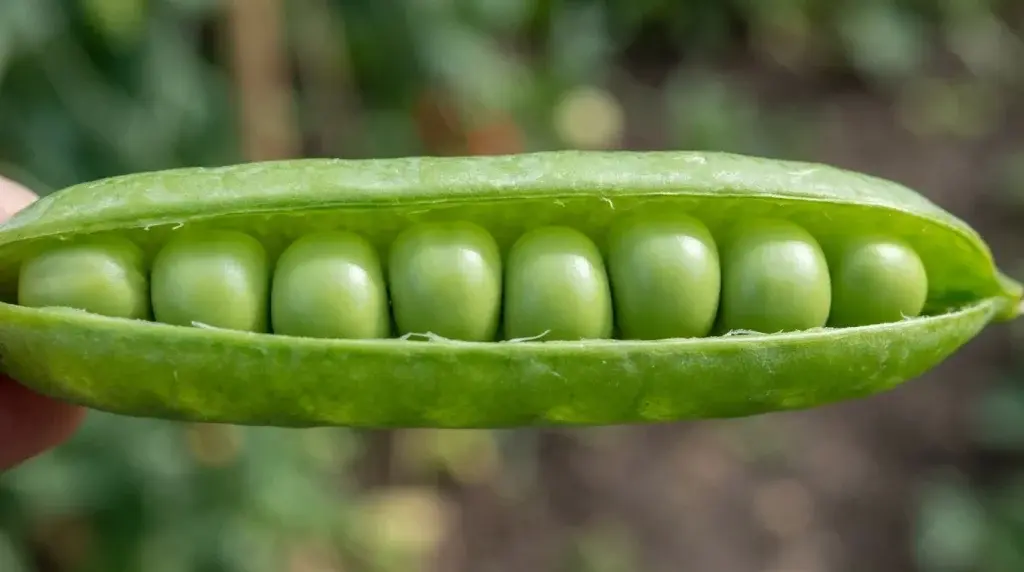
Think about a real pea pod. Open one up and you will see small green peas lined up side by side. They are about the same size, the same color, and they share the same tiny home. That picture is the whole idea behind the saying. Two things that seem to come from the same place and fit together nicely.
Here is a quick view of the phrase at a glance.
| Part | Details |
| Phrase | Two peas in a pod (also “like two peas in a pod”) |
| Type | Idiom, which is a saying with a meaning beyond its plain words |
| Main meaning | Very similar or very close |
| Tone | Warm, friendly, often playful |
| Common users | Friends, twins, siblings, couples, coworkers |
| Opposite idea | Night and day, or “like chalk and cheese” |
Breaking Down the Words in the Idiom
An idiom is a group of words that means something different from the words by themselves. If you took “two peas in a pod” word for word, it would only be about vegetables. Nobody is really talking about dinner. So the phrase works like a small picture in your head.
Each part plays a role. “Two” tells you the saying is about a pair. Most of the time, it points to two people, though it can stretch to a small group. “Peas” are tiny, round, and look almost the same from one to the next. The word “pod” is the shell that holds the peas together. It adds the idea of closeness, because the peas share one tight space.
Put those pieces together, and you get this meaning: two things that look alike, act alike, or belong together.
It also helps to know the saying is a simile when it starts with “like.” A simile compares two things using the word “like” or “as.” When someone says, “They are like two peas in a pod,” they use the simile form. When they say, “They are two peas in a pod,” that is a metaphor, since it states the comparison directly. Both forms are common, and both are correct.
How to Use Two Peas in a Pod Correctly
Using this idiom is easy, but a few small rules keep your writing smooth. The phrase usually sits after a form of the verb “to be,” like “are,” “were,” or “seem.” It also pairs well with words like “look,” “act,” or “seem.”
You can use it in three common patterns:
- Subject + are + like two peas in a pod. Example: “Mia and Zoe are like two peas in a pod.”
- Subject + seem + like two peas in a pod. Example: “The brothers seem like two peas in a pod.”
- Subject + look/act + like two peas in a pod. Example: “The puppies look like two peas in a pod.”
Notice that the phrase stays the same each time. You do not change “peas” or “pod” to match the subject. You also do not say “three peas in a pod” when talking about three friends, though people sometimes do it as a joke. The classic version keeps the number at two, since a pair is the heart of the idea.
One more helpful tip is about the word “like.” Both “They are two peas in a pod” and “They are like two peas in a pod” are fine. The version with “like” is a little more common in everyday speech. The version without it feels a bit bolder and more direct.
The table below shows how the phrase can change in different sentence styles.
| Style | Example sentence |
| Simile (with “like”) | “My sister and I are like two peas in a pod.” |
| Metaphor (no “like”) | “My sister and I are two peas in a pod.” |
| Question | “Aren’t those two like two peas in a pod?” |
| Past tense | “They were two peas in a pod all through college.” |
| With “just” | “The twins are just like two peas in a pod.” |
Real Life Examples of Two Peas in a Pod
Seeing the phrase in action is the best way to learn it. Here are several everyday situations where it fits well.
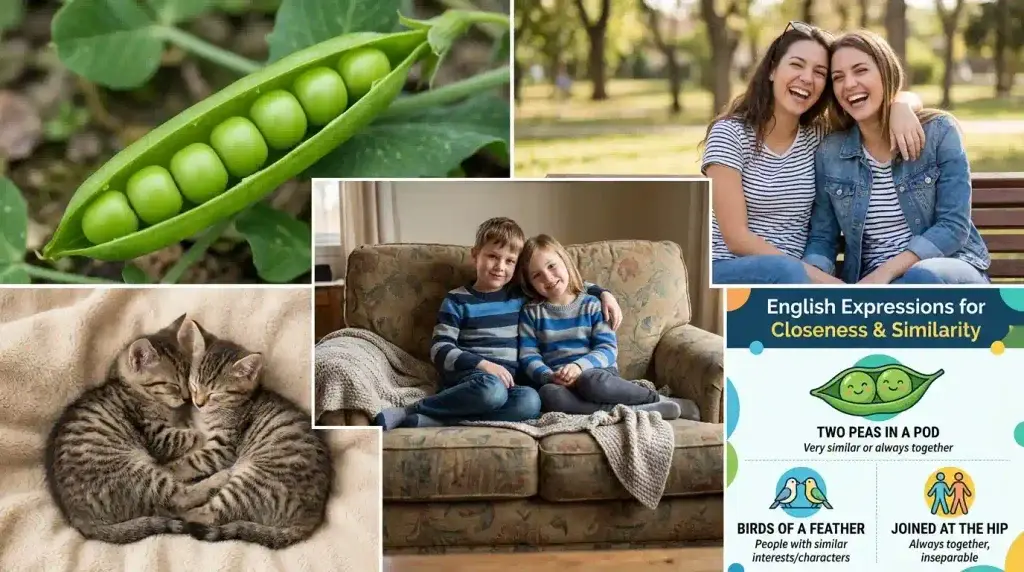
Best friends. Imagine two kids who love the same cartoons, wear the same shoes, and finish each other’s sentences. A teacher might say, “Those two are like two peas in a pod. You rarely see one without the other.”
Siblings. Brothers and sisters often share looks and habits. A grandmother might say, “Ben and his dad are two peas in a pod. They both hum while they cook.”
Couples. Some partners share the same sense of humor and the same dreams. A friend could say, “Anna and Luis are two peas in a pod. They even laughed at the same joke at the same time.”
Coworkers. At work, two people might think the same way about a project. A manager could say, “Priya and Dan are two peas in a pod when it comes to planning. They always agree on the next step.”
Pets. The saying even works for animals. “Our two cats nap in the same spot every day. They are like two peas in a pod.”
Objects or ideas. Less often, people use it for things. “The two phone models are like two peas in a pod. I can hardly see the difference.”
In each case, the saying shows closeness or sameness. The person speaking often sounds happy or amused, which is why it feels so friendly.
Where Did the Saying Come From?
Many people love to ask about the history of a phrase. The honest answer here is that nobody can point to one exact person or moment when it began. Reliable sources show that English speakers have compared two things to peas, and to other tiny matching items, for a very long time. Older English sayings compared very similar things to “two eggs,” and the pea version appears in written English by the 1800s in the form we know today. Beyond that, the story gets fuzzy, and it would be wrong to invent a neat origin tale.
What we can say with confidence is why the picture works. Peas in a pod grow together, share the same space, and look nearly the same. That makes them an easy and clear image for people to remember and pass along. Good sayings last because they paint a picture that anyone can understand, even a child.
If you want exact dates and first uses, a large dictionary such as the Oxford English Dictionary is the best place to check. It tracks the earliest written examples of words and phrases. For everyday use, though, the history does not change how you should use the idiom today.
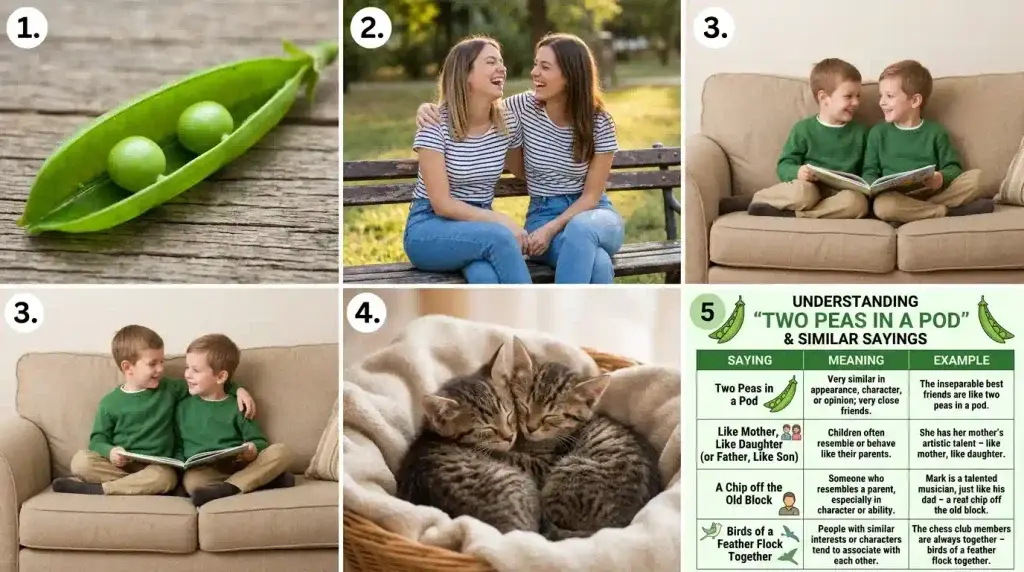
Two Peas in a Pod vs. Similar Sayings
English has many sayings about people who are alike. They are close in meaning, but each has its own flavor. Knowing the small differences helps you choose the best one.
| Saying | Meaning | How it differs |
| Birds of a feather | People with similar traits tend to stay together | Focuses on the group, often used in “flock together” |
| Cut from the same cloth | Two people share the same background or character | Suggests deep, shared roots |
| Spitting image | Someone who looks just like another person | Mostly about looks, often parent and child |
| Chip off the old block | A child who acts like a parent | Only works for family, usually parent and child |
| Two of a kind | Two people who are very alike | Very close in meaning, a little plainer |
| Partners in crime | Two people who do things together, often playfully | Adds the idea of mischief |
| Great minds think alike | Two smart people reached the same idea | About thoughts, not looks or habits |
So what makes “two peas in a pod” special? It covers both looks and habits, and it carries a gentle, cozy feeling. It also suggests the pair are together a lot. “Spitting image” would be a better pick if you only want to talk about looks. “Chip off the old block” is better for a parent and child. The pea saying is the most flexible choice for friends, siblings, and couples.
Opposites and British vs. American English
Some readers also wonder about the opposite of this idiom. In American English, people often say two things are “like night and day” when they are very different. In British English, a well-known saying is “like chalk and cheese.” Both mean the two things have almost nothing in common.
As for the pea saying itself, it works well in both American and British English. You will hear it in the United States, the United Kingdom, Canada, and Australia. No spelling or meaning change is needed. That makes it a safe choice if your readers live in different countries.
Does It Always Mean “Alike”? Good and Not-So-Good Uses
Most of the time, the phrase is a kind one. Still, the feeling behind it can change depending on the sentence. The meaning stays about sameness or closeness, but the tone can shift.
In a happy setting, it is a compliment. “You two are like two peas in a pod!” says the speaker sees a lovely bond.
In a playful setting, it can tease. “Those two are two peas in a pod. They’ll both be late to the party.” Here the speaker smiles while pointing out a shared habit.
In a more serious setting, it can warn. “The two managers are two peas in a pod, and neither one listens to feedback.” That points to a shared flaw. It is less friendly, and the words around it make this clear.
So when you write or speak, think about how the other person might feel. If you call two people two peas in a pod, they will probably smile. If you add a shared fault, make sure the joke is gentle and that they will enjoy it.
Common Mistakes to Avoid
Even simple idioms can trip people up. Here are the mistakes you are most likely to see, along with easy fixes.
The first mistake is changing the words. Some people write “two peas in the pod” or “two peas on a pod.” The standard wording is “in a pod.” Keeping it that way helps readers spot the idiom right away.
Another common slip is mixing the number. Saying “three peas in a pod” for a group of three is understood, but it is a playful twist, not the standard form. In formal writing, stick with “two,” or choose a different phrase for larger groups, such as “birds of a feather.”
A third mistake is using the saying for things that are only a little alike. If two friends both like pizza, that is not enough. The phrase works best when the likeness is strong, such as sharing many habits, looks, or ways of thinking.
People also forget that it is an idiom and use it with a literal meaning in serious writing. In science or cooking articles, “two peas in a pod” will probably be read as a saying, not as a real pea fact. That is fine in a story, but be careful if you want to talk about real peas.
Last, some writers use the phrase too often. An idiom is like a spice. A little adds flavor, but too much makes the writing feel stale. If you already used it once in a piece, try a fresh phrase next time.
Tips for Using the Idiom Well
To use the saying naturally, follow a few simple habits. First, add a small detail so the picture feels real. Instead of only saying, “They are like two peas in a pod,” add, “They both love hiking, bad puns, and strong coffee.” The detail proves the point.
Second, match the phrase to the setting. It fits friendly emails, stories, speeches, cards, and chats. In a very formal report or legal paper, a plainer phrase like “very similar” might be a smarter choice. Idioms can feel too casual in those places.
Third, think about your reader. If you are writing for people learning English, a short explanation after the idiom can help. For example: “They are like two peas in a pod. That means they are very much alike.” This keeps everyone on the same page.
Finally, read the sentence out loud. If it sounds natural, it probably is. If it feels forced, try a different saying from the table above.
Current Usage and How People Say It Today
The phrase is still very much alive. You can find it in books, songs, movies, and everyday talk. It is also common on social media, where people post photos of friends or pets with captions like “two peas in a pod.” Wedding cards, baby announcements, and friendship gifts often use the saying as well.
In recent years, people have also shortened or twisted it for fun. You might see “peas in a pod” alone, or a joke like “three peas in a pod” for a trio of friends. Some brands even use it in product names for items sold in pairs. These changes show that the phrase is flexible and loved. The core meaning, though, has stayed the same.
Because the saying is so familiar, it also works well as a headline or a caption. It tells the reader right away that the post is about a close pair, with no extra explaining needed.
FAQs
What does “two peas in a pod” mean in simple words?
It means two people or things are very much alike or very close. They may look the same, act the same, or fit together so well that it seems like they belong together.
Is “two peas in a pod” a compliment?
Usually, yes. It often shows warmth and friendship. It can also be used as a gentle joke, so the tone depends on the rest of the sentence.
Is it “like two peas in a pod” or just “two peas in a pod”?
Both are correct. With “like,” it is a simile. Without “like,” it is a metaphor. People use both forms every day.
Can I use it for more than two people?
You can for fun, as in “three peas in a pod.” The classic saying uses “two,” though, so for a bigger group a phrase like “birds of a feather” may be a better fit.
Where did the phrase come from?
No one can name the exact first speaker. English has used sayings about very similar small things, such as peas and eggs, for a long time, and the pea version was in print by the 1800s. For exact dates, check a large dictionary like the Oxford English Dictionary.
What is the opposite of “two peas in a pod”?
Common opposites are “night and day” in American English and “chalk and cheese” in British English. Both describe two things that are very different.
Conclusion
The two peas in a pod meaning is easy to remember once you picture the real thing. Two small peas rest side by side in one shell, nearly the same in size, shape, and color. That is why people use the saying for friends, family members, couples, and pets who are alike or always together.
To use it well, keep the wording the same, add a small detail to make the picture clear, and choose a tone that fits your reader. Avoid using it for things that are only slightly alike, and try not to repeat it too often. When you want a different shade of meaning, you can pick “spitting image,” “cut from the same cloth,” or “birds of a feather.”
So the next time you spot two people who share every joke and every habit, you will know the perfect phrase. Say it with a smile, and they will probably take it as the kind compliment you meant.

Hi, I’m Sarah Mitchell. I love writing faith-based content that brings peace, hope, and encouragement to everyday life. Through prayers and devotionals, my goal is to help readers feel closer to God and stronger in faith.